Field notes
Vegetable Garden Layout: Plans, Spacing, and Beginner-Friendly Designs
Plan a vegetable garden layout that actually produces: where to site it, how far apart to space crops, rows versus blocks, a copy-ready 4 by 8 plan, companion planting, and crop rotation.
TL;DR
- A good vegetable garden layout starts with sun: most fruiting crops want 8 hours, leafy greens get by on 4 to 5.
- Put tall crops (tomatoes, corn, beans on supports) on the north side so they do not shade everything else.
- Plant in blocks, not long single rows, to fit more food into the same space and shade out weeds.
- A 4 by 8 foot bed (about 32 square feet) is the ideal first plan: enough for greens, roots, beans, and a tomato or two.
- Group crops by family so you can rotate them next year, and tuck in companions like basil with tomatoes.
A vegetable garden layout is just a plan for what goes where, and getting it right is most of the work of a productive plot. Spacing, sun, and grouping decide whether your plants thrive or fight each other for light and water. This guide walks through siting, spacing, rows versus blocks, a copy-ready beginner plan, companion planting, and crop rotation, so your first season actually feeds you.
How do you plan a vegetable garden layout?
Start with a sketch on paper, then place crops by height and sunlight before you plant a single seed. A five-minute drawing saves a whole season of guesswork, because once a bed is planted you cannot easily move a sprawling squash that is smothering your carrots.
Work in this order. First, mark where the sun falls and put the bed in the sunniest spot. Second, draw the bed to scale on graph paper, one square per foot, so spacing is honest. Third, place your tallest crops on the north edge and work down to the shortest on the south. Fourth, fill the space in blocks rather than thin rows.
If you would rather not draw by hand, a free garden planner does the spacing math for you and shows how many plants fit. Either way, the plan is the point: you are deciding the layout once so the season runs itself.
Where should you put the garden?
Put the garden in the sunniest, most level spot you have, with easy access to water. Sun is the single biggest factor in yield, and no amount of good soil makes up for a shady corner.
Watch your yard across a day before you commit. South-facing, open ground is best in the northern hemisphere. Avoid the base of slopes where cold air and water pool, and keep the bed away from large trees, which steal both light and moisture at the roots.
Access matters more than people expect. Site the garden where you walk past it daily, within reach of a hose, because the crops you see are the crops you water and harvest. If your only sunny ground is a patio or balcony, containers solve the problem, and raised beds let you build good soil on top of poor ground.
How much sun does each type of crop need?
Different crops need very different amounts of sun, so group them by their light needs in your layout. Matching a crop to the light it actually gets is what separates a full harvest from a row of pale, leggy plants.
As a rule of thumb from Rutgers, fruiting vegetables such as tomatoes, peppers, cucumbers, and zucchini need at least 8 hours of direct sun. Root crops like carrots, beets, and onions manage on 5 to 6 hours. Leafy greens such as lettuce, spinach, and chard are the most forgiving and crop well on just 4 to 5 hours.
| Crop type | Examples | Minimum direct sun |
|---|---|---|
| Fruiting | Tomato, pepper, cucumber, zucchini | 8 hours |
| Root | Carrot, beet, onion, radish | 5 to 6 hours |
| Leafy | Lettuce, spinach, kale, chard | 4 to 5 hours |
Use this to your advantage. Save the brightest part of the bed for tomatoes and peppers, and slot quick salad crops into the spots that get a little shade in the afternoon.
How far apart should you space your vegetables?
Space each crop to the size it reaches at maturity, not the size of the seed. Crowded plants compete for light, water, and food, and a few well-spaced plants almost always out-produce a packed bed.
Follow the numbers on the seed packet, then thin seedlings without mercy. As a starting point, the row spacing Rutgers lists gives a feel for the range: tomatoes about 24 in (60 cm) apart, bush beans about 4 in (10 cm) apart, and leaf lettuce about 8 in (20 cm) apart.
Common spacings for beginners:
- Lettuce and salad leaves: 8 in (20 cm) apart
- Carrots, beets, radishes: 2 to 4 in (5 to 10 cm) apart
- Bush beans: 4 to 6 in (10 to 15 cm) apart
- Peppers: 15 in (38 cm) apart
- Tomatoes: 24 in (60 cm) apart
When in doubt, give a plant more room rather than less. You can always tuck a fast radish into a gap, but you cannot un-crowd a bed in July.
Rows or blocks: which grows more food?
Blocks grow more food than long single rows in most home gardens. Planting in wide blocks or grids uses the whole bed for crops instead of giving up half of it to walking paths.
The traditional farm layout, single rows with a path between each one, made sense when people worked the soil with a tractor or hoe. In a home bed you reach in from the sides, so you can plant a solid block and only walk on the paths around it. This is the idea behind square-foot and intensive planting: more plants per square foot, less bare soil, and fewer weeds because the leaves shade the ground.
Keep any block narrow enough to reach the middle from a path, which usually means a bed no wider than 4 ft (1.2 m). For the full case for building beds this way, see our guide to raised bed crops.
A simple 4 by 8 foot vegetable garden layout
The easiest first plan is a single 4 by 8 foot bed, which gives about 32 square feet of growing space. The Old Farmer’s Almanac recommends this size as a beginner bed because it fits a real mix of crops while staying small enough to manage.
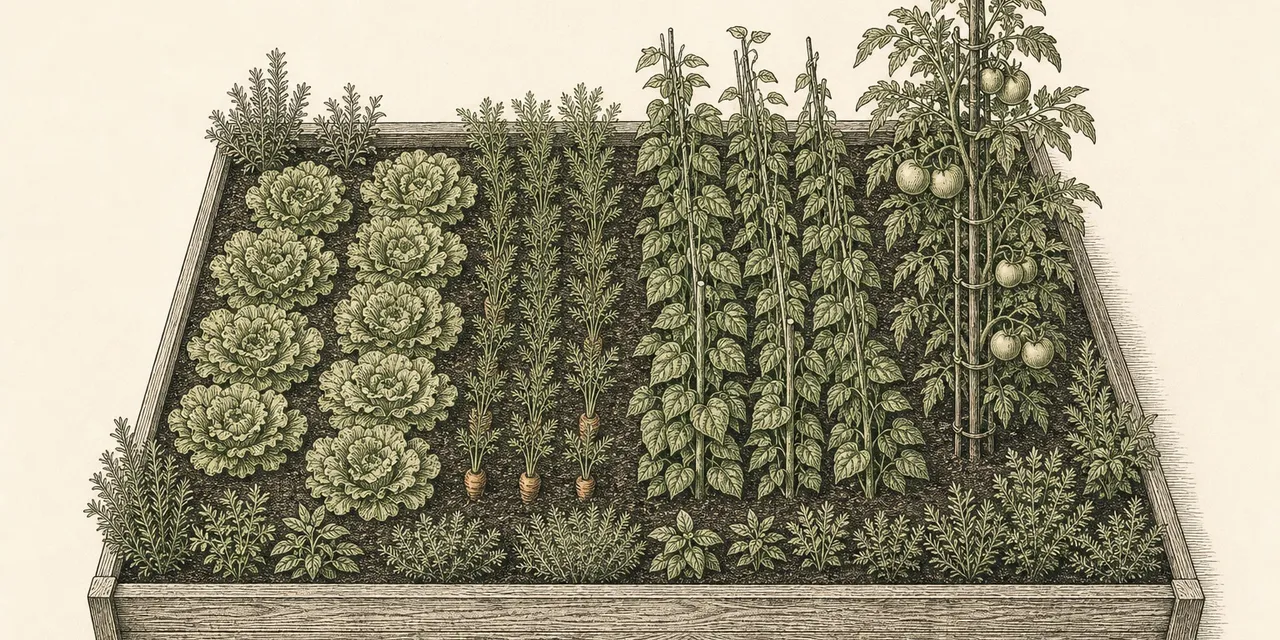
Here is a copy-ready plan. Orient the bed so the 8 ft sides run east to west, and read the rows from the north (back) to the south (front):
- North edge: a row of staked tomatoes or pole beans on a trellis, the tallest crops.
- Next: bush beans and a couple of pepper plants.
- Middle: a block of carrots and beets sown thickly, then thinned.
- Front block: cut-and-come-again lettuce and other salad leaves.
- Edges and corners: herbs like basil, parsley, and chives, plus a few marigolds.
This single bed comfortably holds 40 to 50 plants and supplies salad, beans, roots, and herbs through the season. When you are ready to scale up to something like a 20 by 40 foot plot, you simply repeat the same logic across several beds with paths between them. Whatever the size, fill it with good bed soil, because layout cannot fix poor ground.
What should you plant next to each other?
Plant crops together that help rather than hinder each other, a practice called companion planting. Some pairings deter pests, some draw in pollinators, and some simply use space and light in complementary ways.
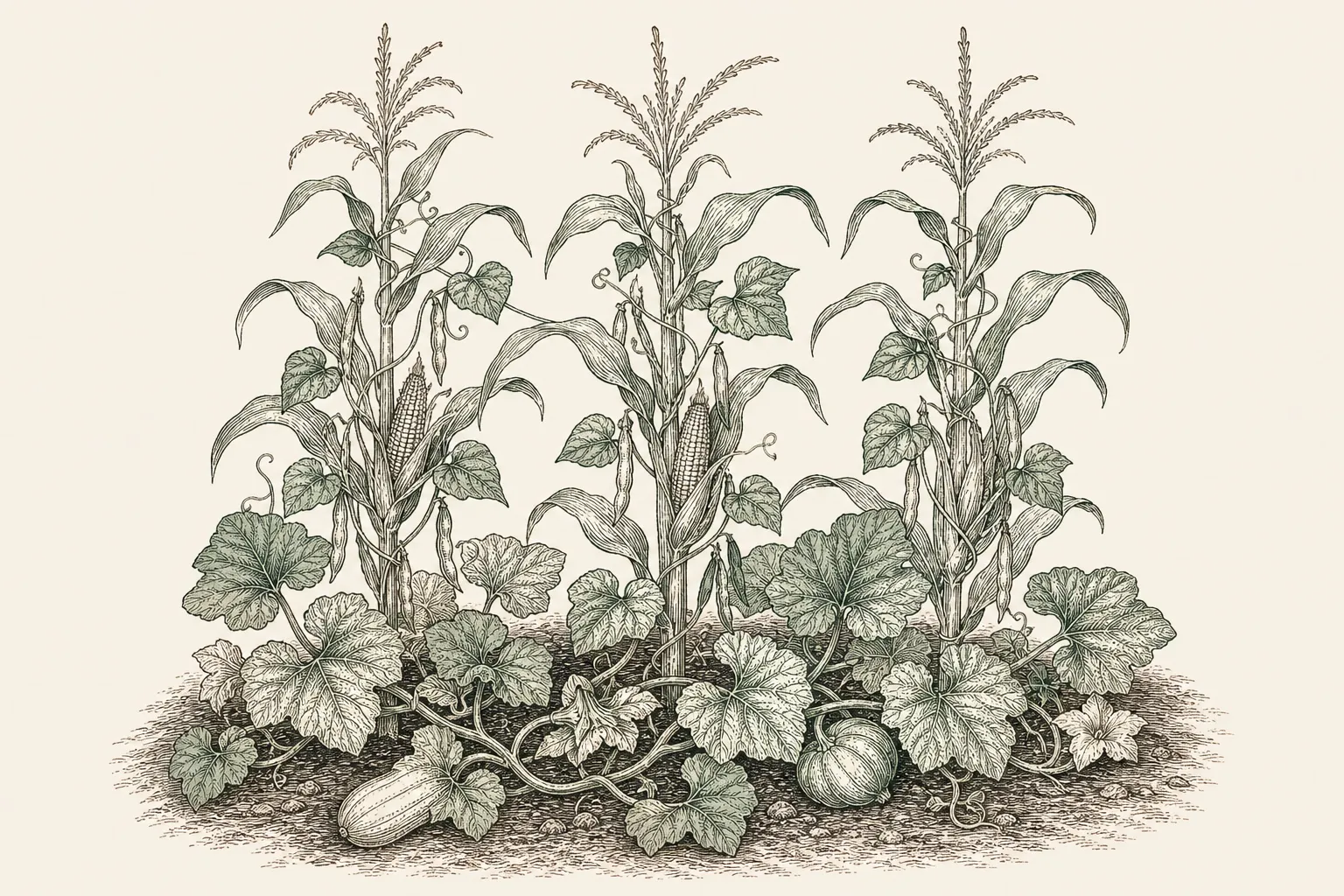
The classic example is the three sisters: corn gives climbing beans something to scramble up, beans feed the soil with nitrogen, and squash sprawls below to shade out weeds. On a smaller scale, basil is a reliable partner for tomatoes, and flowers like nasturtiums and marigolds tucked among the vegetables pull in beneficial insects.
A few easy combinations to start with:
- Tomatoes with basil and parsley
- Carrots with onions or leeks
- Lettuce in the light shade of taller beans or tomatoes
You do not need a complex chart to benefit. Mixing a few herbs and flowers through the beds, rather than planting one crop in a solid block, already makes the garden more resilient.
How do you rotate crops from year to year?
Move each crop family to a different part of the garden each season so pests and diseases cannot build up in the soil. Growing the same vegetable in the same spot year after year invites the exact problems that crop rotation prevents.
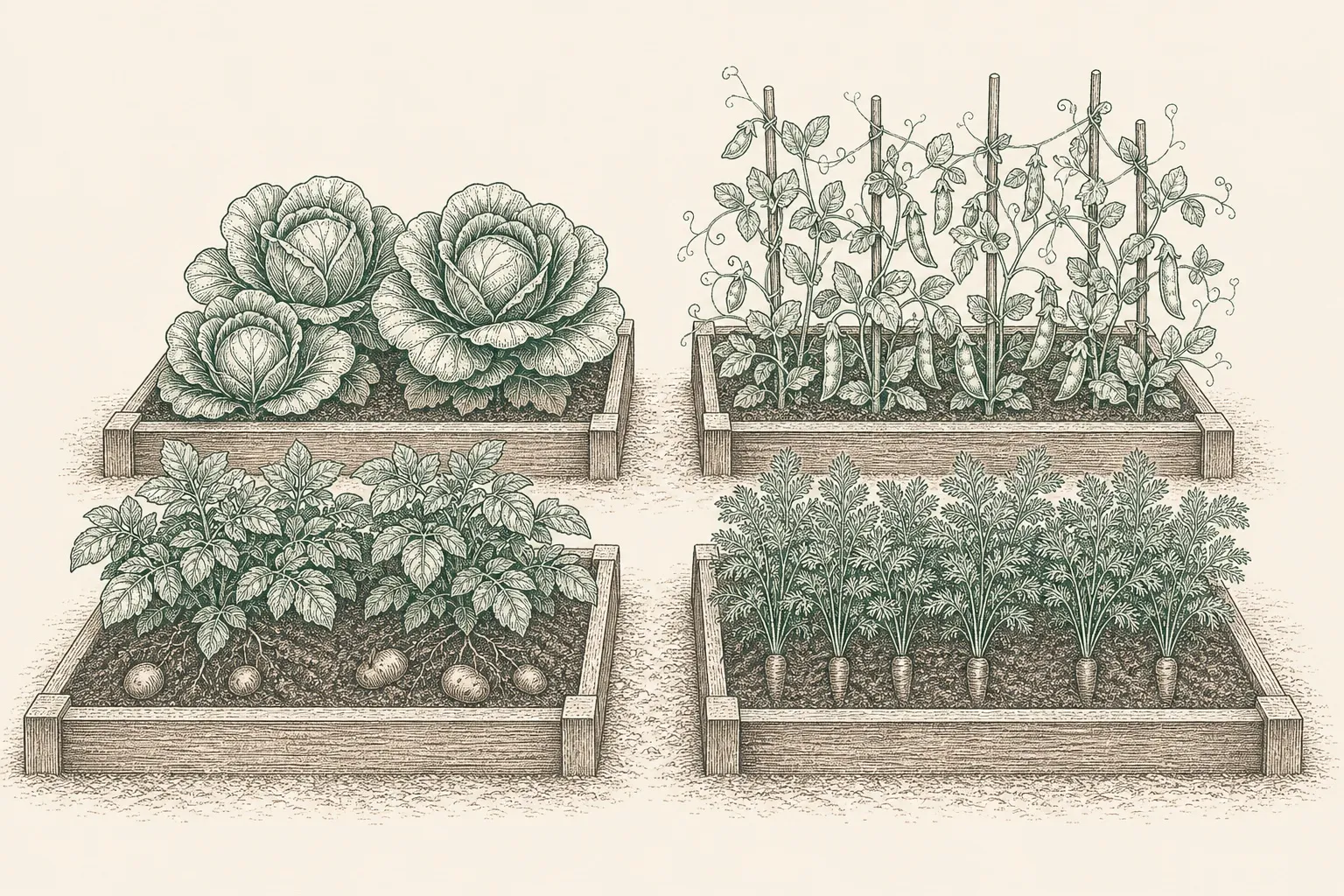
The crop rotation groups the RHS uses make this simple. Divide your crops into four families and shift each group along by one bed or section every year:
- Brassicas: cabbage, kale, broccoli, radish, turnip
- Legumes: peas, broad beans, French and runner beans
- Potato family: potatoes, tomatoes
- Roots: carrots, beets, parsnips, celery
Perennials like rhubarb and asparagus stay put, and loose annuals like squash, lettuce, and sweetcorn can fill in wherever there is room. Sketching this year’s layout and keeping it means next year’s rotation takes about two minutes.
Small-space and container layouts
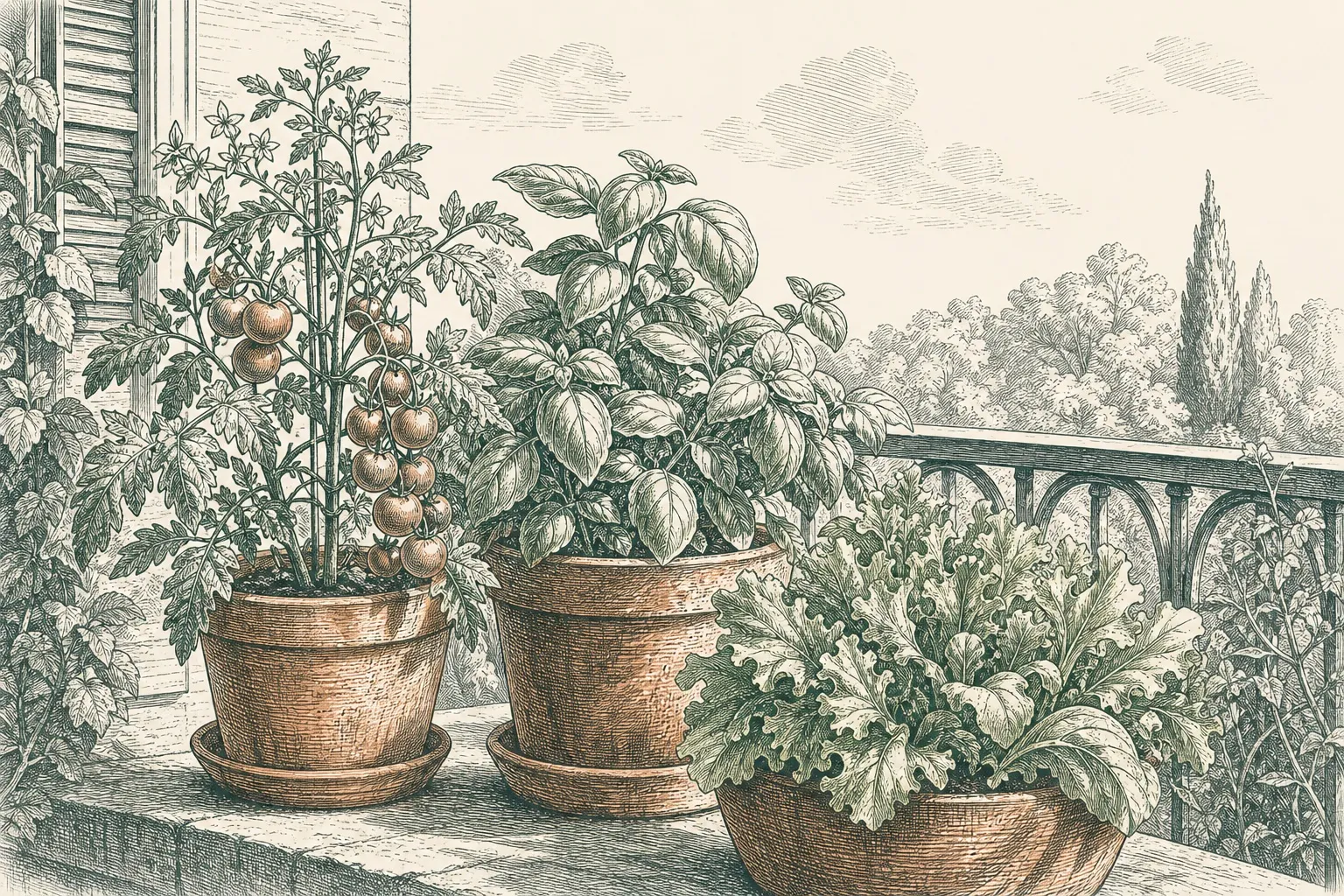
No yard is no barrier, because most vegetables grow well in containers on a balcony, patio, or sunny step. The layout rules are the same, just scaled down: chase the sun, group by height, and do not crowd.
Choose pots by depth. Salad leaves and herbs are happy in 6 to 8 in (15 to 20 cm) of soil, while tomatoes, peppers, and beans want a deep pot of at least 12 in (30 cm) holding 5 gallons (about 20 litres) or more. Cluster pots so taller plants do not shade the shorter ones, and stand them on a tray or saucer to slow drying.
Containers dry out fast, so plan for daily watering in summer and use a good multipurpose potting mix rather than garden soil. A single sunny windowsill is enough for a productive run of cut-and-come-again herbs and salad.
Keeping beds full with succession planting
A productive layout plans for time as well as space, so a bed is never sitting empty. As soon as one quick crop comes out, another goes straight in.
The simple version is successional sowing: sow a short row of fast crops like lettuce, radish, or beans every two to three weeks rather than all at once. You get a steady supply instead of a glut, and the bed keeps earning its space.
Pair early and late crops in the same spot too. Follow spring radishes and lettuce with summer beans, then a fall sowing of spinach or more salad. By the end of the year a single square foot may have grown three different crops.
Vegetable garden layout mistakes to avoid
The most common vegetable garden layout mistakes all come down to crowding and ignoring the sun. Avoid these and your first plan will already be ahead of most.
- Planting too close: it feels generous in spring and turns into a tangle by July. Thin to the packet spacing.
- Tall crops on the south side: they shade everything behind them. Keep them on the north edge.
- One giant block of a single crop: it ripens all at once and invites pests. Mix it up and sow in succession.
- Skipping the paths: if you cannot reach the middle without stepping on the soil, you compact it. Keep beds 4 ft (1.2 m) wide at most.
- No record of what went where: without it, you cannot rotate next year. Photograph or save your plan.
Start small, plant in blocks, respect the spacing, and let the layout do the heavy lifting. A tidy 4 by 8 plan you actually keep up with beats a sprawling plot that gets away from you every time.