Field notes
Raised Bed Gardening: The Complete Beginner's Guide
Start raised bed gardening the right way: pick the best size, fill it with the right soil, build it in a weekend, and grow more food in less space.
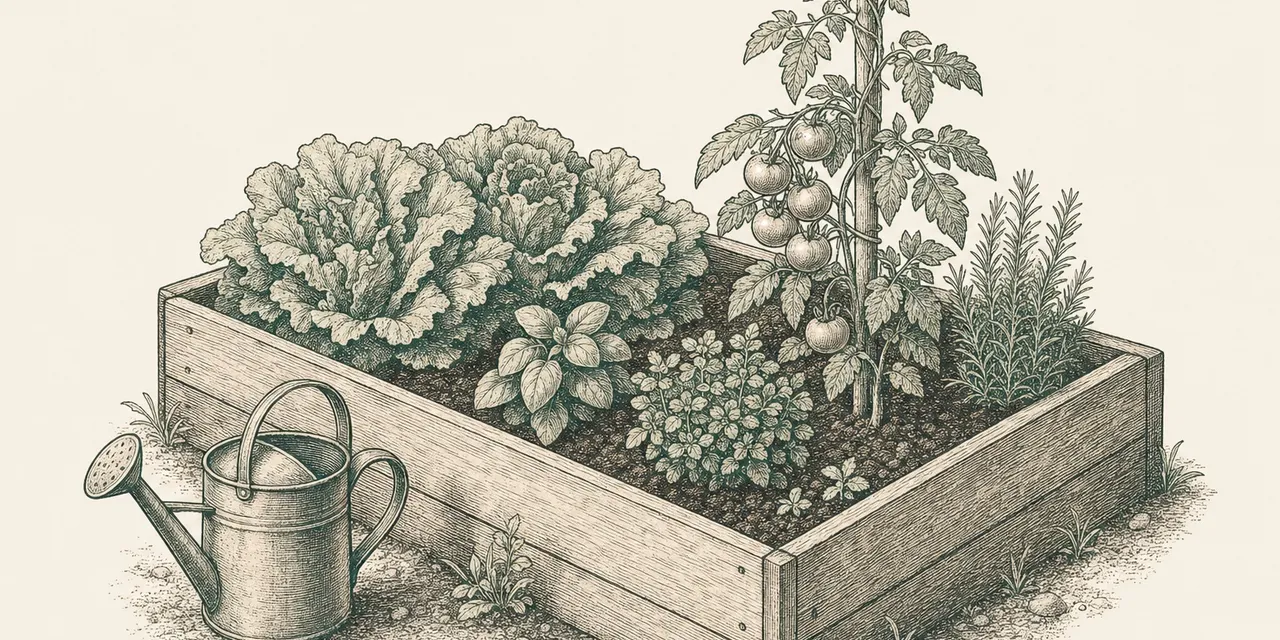
TL;DR
- Raised bed gardening means growing in a contained, soil-filled frame above the ground, which gives you better drainage, warmer soil, and fewer weeds.
- Keep beds narrow enough to reach the middle without stepping on the soil: about 3 to 4 feet wide (90 to 120 cm) is the sweet spot.
- Most vegetables are happy in 8 to 12 inches (20 to 30 cm) of good soil. Deeper roots and shrubs want more.
- Fill with a blend of topsoil and compost, not bagged “raised bed mix” alone, and top up with compost every season.
- You can build a simple bed in a weekend with four boards and a handful of screws, then plant the same day.
Raised bed gardening is the fastest way for a beginner to grow real food and actually succeed. Instead of fighting heavy clay, poor drainage, or a lawn full of weeds, you build a clean box, fill it with soil you control, and start planting. This guide walks you through what raised bed gardening is, why it works so well, how big to make your beds, what to put in them, how to build one, and what to grow first.
What is raised bed gardening?
Raised bed gardening is growing plants in a frame of soil held above the surrounding ground. The frame is usually wood, but it can be metal, brick, or recycled material. The key idea is simple: you bring in and manage your own soil rather than relying on whatever is already in the ground.
That one change solves a lot of beginner problems at once. You decide the soil quality. You decide where the bed goes. You never compact the growing area by walking on it, because you reach in from the paths instead. A bed can sit on poor soil, on gravel, or even on a hard surface if it is deep enough.
Beds come in two broad types. The first is a framed bed, a box with sides that holds a deep layer of imported soil. The second is a simple mound, which the experts describe as flat-topped mounds six to eight inches high with no sides at all. Mounds cost nothing but erode faster. For most people, a framed bed is worth the small extra effort.
Why choose raised bed gardening?
You should choose raised bed gardening because it gives you healthier soil, less work, and an earlier start to the season. These are the exact things that make or break a first harvest.
Drainage comes first. Because the soil sits above ground level, water moves through it instead of pooling. The RHS notes you can fill a bed with a free-draining mix, which is especially useful if your garden soil is heavy or prone to waterlogging. Roots that sit in soggy soil rot. Roots in well-drained soil thrive.
Warmth comes next. Soil in a raised bed warms up faster in spring, so you can sow and transplant earlier than you could in open ground. A few extra weeks at the start of the year can mean an extra harvest at the end.
The rest is comfort and control. You bend less, you weed less, and you keep paths and growing soil separate so the soil stays loose. For anyone with bad knees, a small yard, or stubborn native soil, those advantages add up quickly.
How tall and wide should a raised bed be?
A raised bed should be narrow enough to reach the center from the side and deep enough for the roots you plan to grow. Width and depth matter more than length.
For width, the rule is your arm. If you can only reach a bed from one side, keep it to about 2.5 feet. If you can walk around both sides, you can go wider. The University of Minnesota suggests sizing by how far you can reach the middle without standing on the soil, and the RHS recommends beds that stay narrow, under about 5 feet, for the same reason. For most home gardeners, 3 to 4 feet wide is the practical sweet spot.
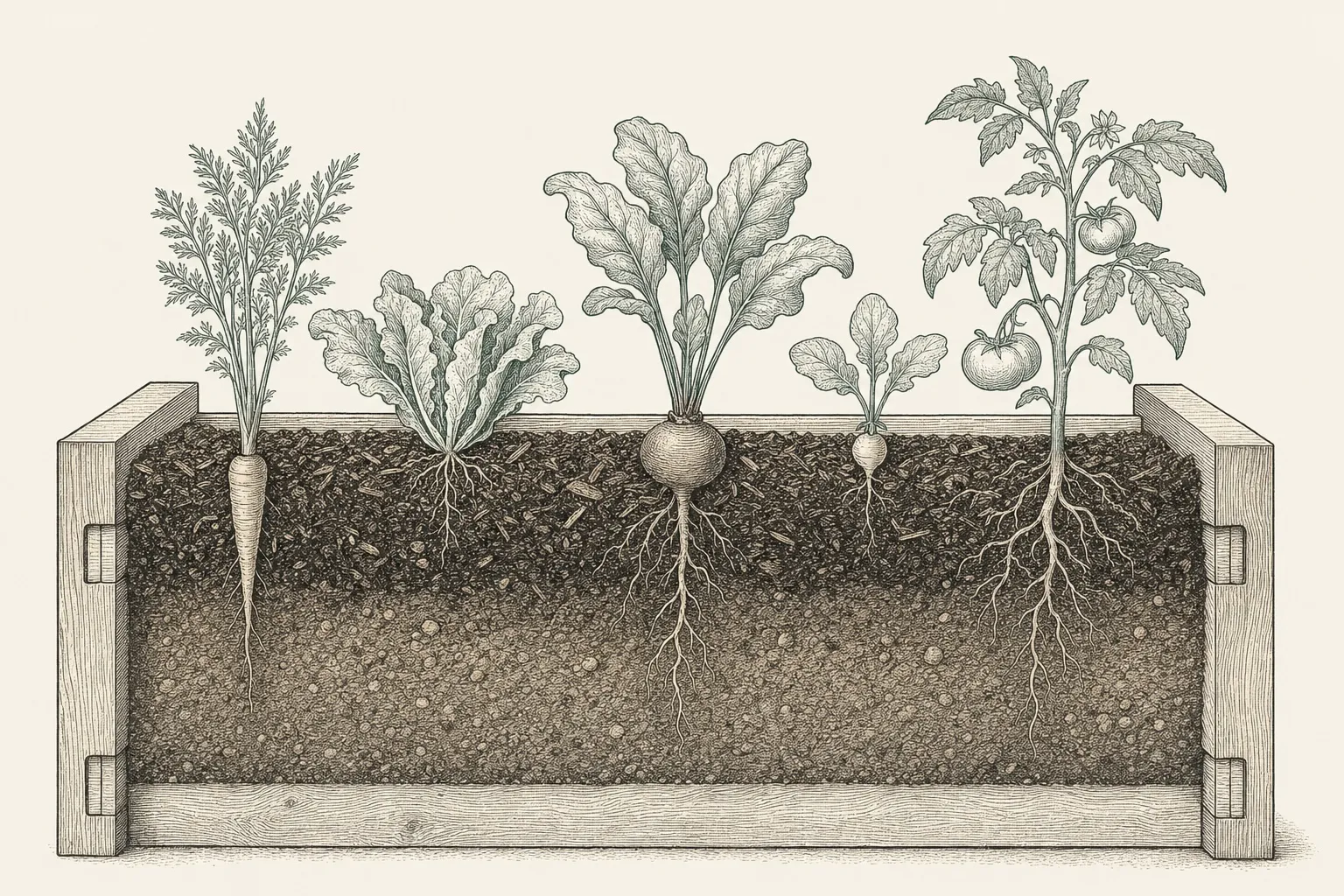
Depth depends on what you grow. Leafy greens, herbs, and most annual vegetables are content in 8 to 12 inches (20 to 30 cm) of soil. Deeper-rooted crops and woody plants want more. The RHS points out that fruit bushes, shrubs, and small trees need a root depth of 45 cm (18 in) or more. When in doubt, build a little deeper than you think you need.
Length is flexible. Beds of 6 to 8 feet are easy to build and easy to reach across. Longer beds save materials but tempt you to step over or into them, so add a stepping stone or a gap if you go long.
What should you fill a raised bed with?
Fill a raised bed with a blend of quality topsoil and compost, not pure bagged mix and not native dirt alone. The soil is the single biggest factor in how well the bed performs, so this is not the place to cut corners.
A reliable starting blend is roughly half to two thirds topsoil and one third to one half compost. The University of Minnesota recommends a mix of topsoil and compost in about those proportions. Topsoil gives the bed body and holds moisture. Compost feeds the soil life and supplies nutrients. Together they make a loose, fertile, free-draining home for roots.
To work out how much you need, multiply length by width by depth in feet to get cubic feet. A 4 by 8 foot bed filled to 12 inches needs about 32 cubic feet, which is a bit over one cubic yard. Buying soil in bulk is far cheaper than buying it by the bag once you pass two or three beds.
Skip the temptation to fill the bottom with logs or branches for your first bed. That method can work, but it settles and sinks, and beginners often end up with a half-empty bed by midsummer. Start with good soil all the way down, then top up with an inch or two of compost each season.
How do you build a raised bed in a weekend?
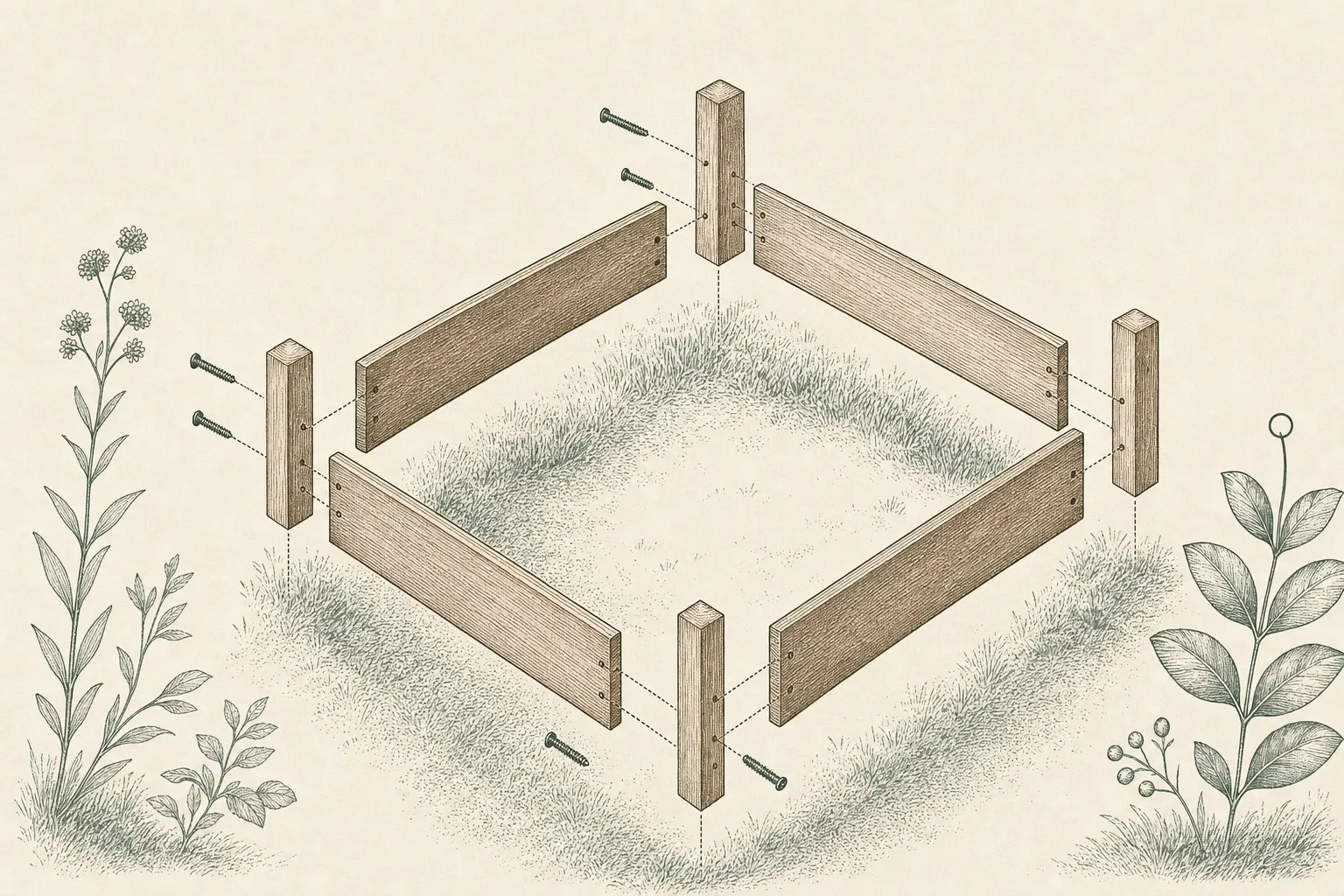
You can build a basic raised bed in an afternoon with four boards, some screws, and a drill. The simplest design is a rectangle, and it does not need to be fancy to last for years.
Here is a straightforward plan for one 4 by 8 foot bed:
- Buy two boards at 8 feet and two boards at 4 feet, ideally untreated cedar or another rot-resistant wood, 2 inches thick and 10 to 12 inches tall.
- Stand them on edge to form a rectangle and screw the corners together. Add a corner post or bracket inside each joint for strength.
- Choose a spot with at least 6 to 8 hours of sun a day and set the frame in place. Level it roughly so water does not run off one end.
- Lay cardboard on the ground inside the frame to smother grass and weeds. It breaks down over a few months.
- Fill with your topsoil and compost blend, rake it level, and water it once to help it settle.
That is the whole job. If you want a tidier path, lay wood chips or gravel around the bed. If gophers or moles are a problem, staple hardware cloth across the bottom before you fill. For more layouts and sizes, browse our growing guides as we add them.
What can you grow in a raised bed?
You can grow almost any vegetable, herb, or small fruit in a raised bed, and beginners get the best results by starting with fast, forgiving crops. A 4 by 8 bed is enough to keep a household in salads and herbs all season.
Easy, high-reward choices for a first year include:
- Salad leaves and lettuce, which crop within weeks and can be cut again and again.
- Bush beans, which need little care and produce heavily.
- Zucchini, which one or two plants will more than cover.
- Radishes and carrots, which suit the loose, stone-free soil of a raised bed.
- Herbs such as basil, parsley, and chives, which earn their space every day.
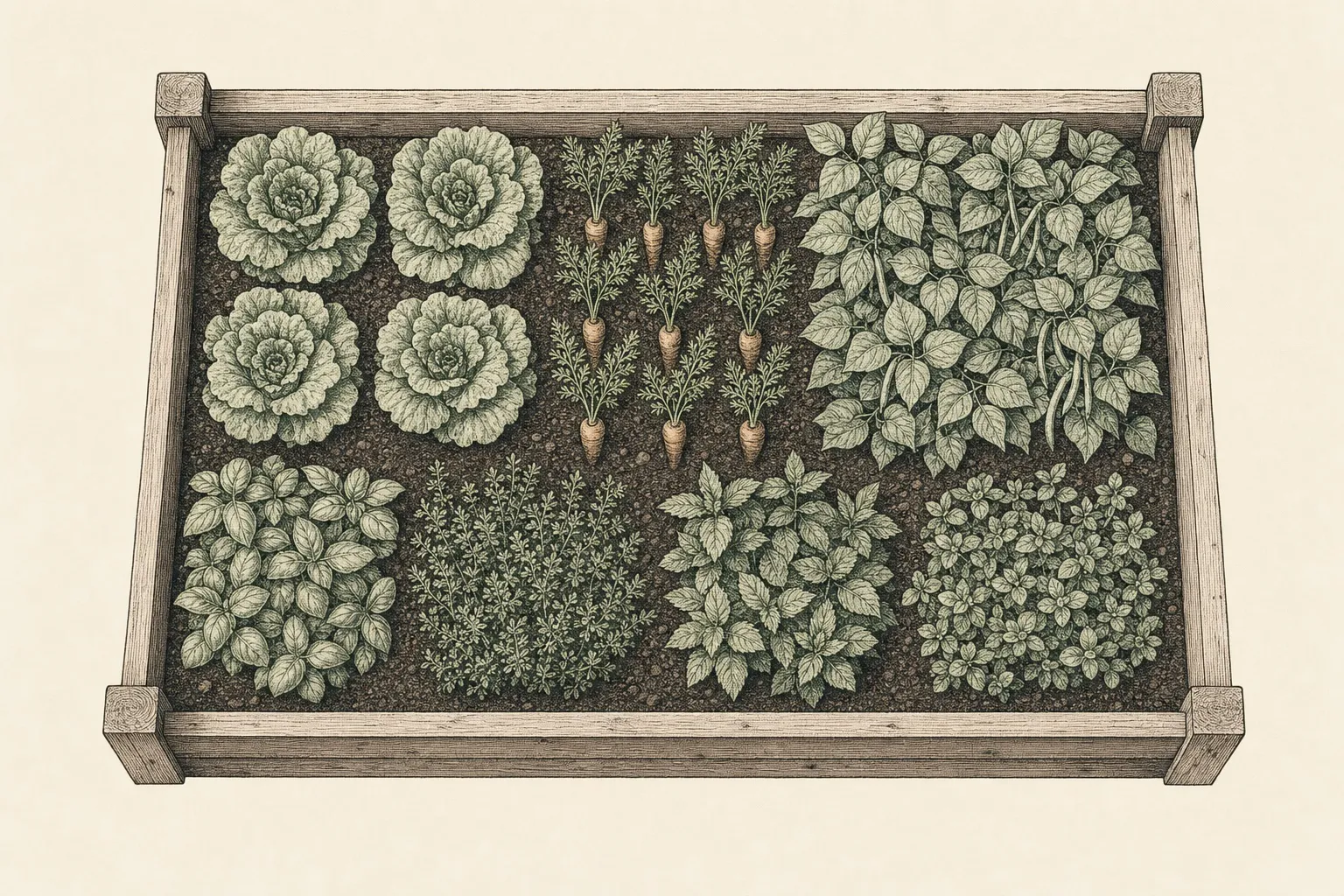
Once you have a season under your belt, branch into tomatoes, peppers, kale, beets, and garlic. Plant in blocks rather than long single rows to make the most of the space, and slip quick crops like radishes between slower ones to keep the bed productive. A simple square layout, divided into a grid, is an easy way to plan spacing without overthinking it.
Caring for your raised bed through the seasons
Raised beds dry out faster than open ground, so watering is the habit that matters most. Check the soil with a finger. If the top inch or two is dry, water deeply at the base of the plants rather than little and often. Deep, less frequent watering pushes roots down and makes plants tougher in heat. A layer of mulch, such as straw or shredded leaves, keeps moisture in and weeds down.
Feeding is the next habit. Top the bed with an inch or two of compost at the start of each season, and add a balanced organic feed for hungry crops like tomatoes once they start to fruit. Because you never walk on the soil, it stays loose, so you rarely need to dig. Just pull the occasional weed while it is small and keep the surface covered.
Over the year, rotate where you plant each family of crops so pests and diseases do not build up in one spot. In cold regions, a simple cover or cold frame over the bed extends the season at both ends.
Common raised bed mistakes to avoid
The most common beginner mistakes are easy to dodge once you know them. Avoid these and your first season will go far more smoothly.
- Making beds too wide. If you cannot reach the center comfortably, you will compact the soil reaching across. Keep beds within arm’s reach.
- Filling with poor or pure native soil. Heavy clay or dusty subsoil will disappoint you. Invest in a real topsoil and compost blend.
- Letting the bed dry out. Raised beds need more frequent watering than the ground, especially in summer and especially in containers.
- Planting in too much shade. Most vegetables want full sun. Watch your yard for a day and pick the brightest spot.
- Cramming in too many plants. Crowded plants compete and underperform. Follow spacing guidance and thin without guilt.
Your raised bed gardening starting point
Raised bed gardening rewards a small amount of planning at the start. Pick a sunny spot, build one bed you can reach across, fill it with a good topsoil and compost blend, and plant a few easy crops you actually want to eat. That single bed will teach you more in one season than any amount of reading.
Start with one. You can always add another next year once you have seen how much a single raised bed can produce. When you are ready for the next step, our guides on filling, building, and planting beds go deeper on each part of the process.