Field notes
Raised Bed Vegetable Gardening: What to Grow and How to Start
A practical guide to raised bed vegetable gardening: the best crops for beginners, the right size and soil, a simple layout, and when to plant.
TL;DR
- Raised beds are the easiest way to grow a lot of vegetables in a small, tidy space, with better soil and fewer weeds.
- Start with fast, forgiving crops: salad leaves, bush beans, radishes, carrots, beets, and herbs.
- Keep the bed about 3 to 4 feet wide so you can reach the middle, and 8 to 12 inches deep for most vegetables.
- Fill with a blend of topsoil and compost, and plant in blocks rather than long single rows to fit more in.
- Water deeply two or three times a week, feed hungry crops once they fruit, and sow a little every few weeks for a longer harvest.
Raised bed vegetable gardening is the fastest way to go from bare ground to a full salad bowl. You control the soil, you never trample the growing area, and a single tidy box can feed a household through the season. This guide covers what to grow, how big to build, what soil to use, how to lay it out, and when to plant, so your first bed actually produces.
Why does raised bed vegetable gardening work so well?
It works because you control the three things vegetables care about most: soil, drainage, and warmth. Instead of fighting whatever is in your yard, you build a clean box and fill it with exactly what roots want.
Drainage comes first. Vegetables hate wet feet, and a raised bed lets water move through rather than pool. The RHS notes you can fill a bed with a free-draining mix, which is a real advantage if your ground is heavy clay. Warmth comes next: soil in a raised bed warms faster in spring, so you can sow earlier and harvest sooner.
The rest is convenience. You weed less, you bend less, and because you work from the paths you never compact the soil. Loose, rich, well-drained soil is most of the battle, and a raised bed gives you all three from day one.
What vegetables grow best in a raised bed?
Almost everything grows well in a raised bed, but beginners get the best results from fast, forgiving crops. Pick a few you actually like to eat and you will keep coming back to the garden.
Reliable first-year choices:
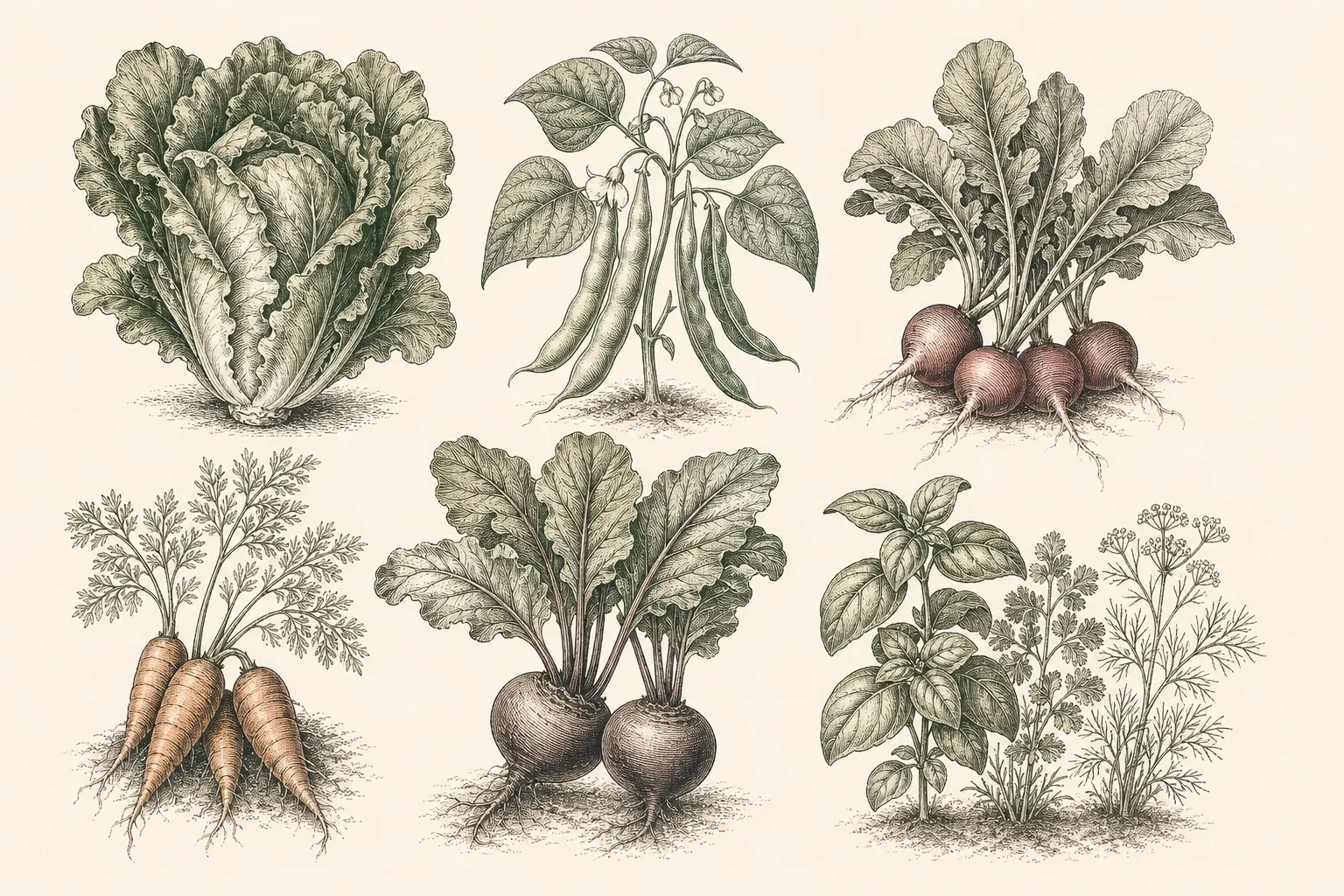
- Salad leaves and lettuce: cut-and-come-again, ready in weeks.
- Bush beans: heavy croppers that need little fuss.
- Radishes: from seed to plate in about a month.
- Carrots and beets: they love the loose, stone-free soil of a bed.
- Kale and chard: productive for months from one sowing.
- Herbs: basil, parsley, chives, and dill earn their space daily.
Add tomatoes, peppers, courgette, and bush cucumbers once you have a season behind you. Skip space-hungry sprawlers like pumpkins and maincrop potatoes in a small bed: they take over and crowd out everything else.
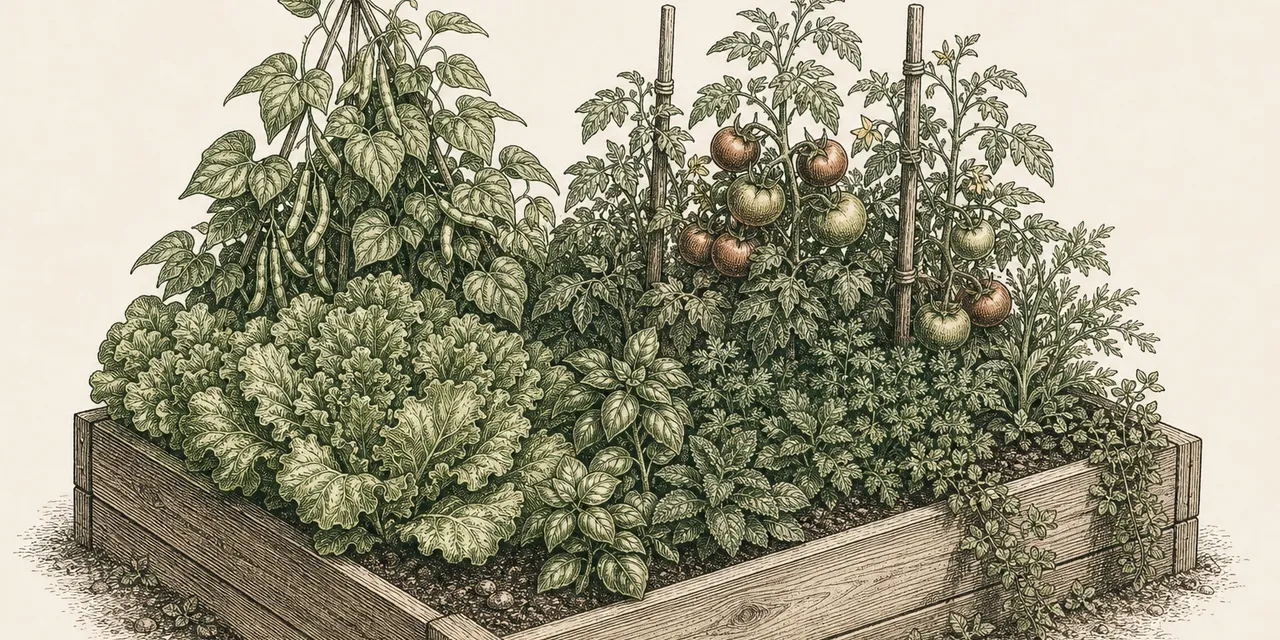
How much you can fit surprises most beginners. A single 4 by 8 foot bed has room for a block of salad leaves, a row of beans, a patch of carrots and beets, a couple of kale plants, and a staked tomato, all at once. Give each crop the spacing on the seed packet, then thin seedlings ruthlessly. Crowded plants compete for light, water, and food, and a few well-spaced plants almost always out-produce a packed bed.
How big should a raised vegetable bed be?
Build it narrow enough to reach the center and deep enough for the roots you want to grow. Width and depth matter far more than length.
For width, use your arm as the guide. The University of Minnesota suggests sizing the bed so you can reach the middle without standing on the soil, which for most people means 3 to 4 feet across. For depth, 8 to 12 inches (20 to 30 cm) suits most vegetables. Deep-rooted crops like carrots, parsnips, and tomatoes do better with more: the RHS recommends a root depth of 45 cm (18 in) or more for the hungriest plants.
Length is up to you. A 4 by 8 foot bed is easy to build and easy to reach across, and it is enough to keep a household in salads and herbs all summer. If you want the full build, start with our raised bed guide.
What soil should you fill it with?
Fill it with a blend of quality topsoil and compost, not bagged potting mix and not native dirt alone. Soil is the single biggest factor in how much you harvest.
A reliable mix is roughly half to two thirds topsoil and one third to one half compost. The University of Minnesota recommends a blend of topsoil and compost in about those proportions. Topsoil holds moisture and gives the bed body, while compost feeds the soil life and supplies nutrients. Top the bed with an inch or two of fresh compost at the start of each season and your vegetables will rarely go hungry.
Resist the urge to fill the bottom with logs or branches to save on soil. That layer settles and sinks, and beginners often find a half-empty bed by midsummer. For your first season, fill with good soil all the way down, then top up with compost each year.
How do you lay out a raised bed vegetable garden?
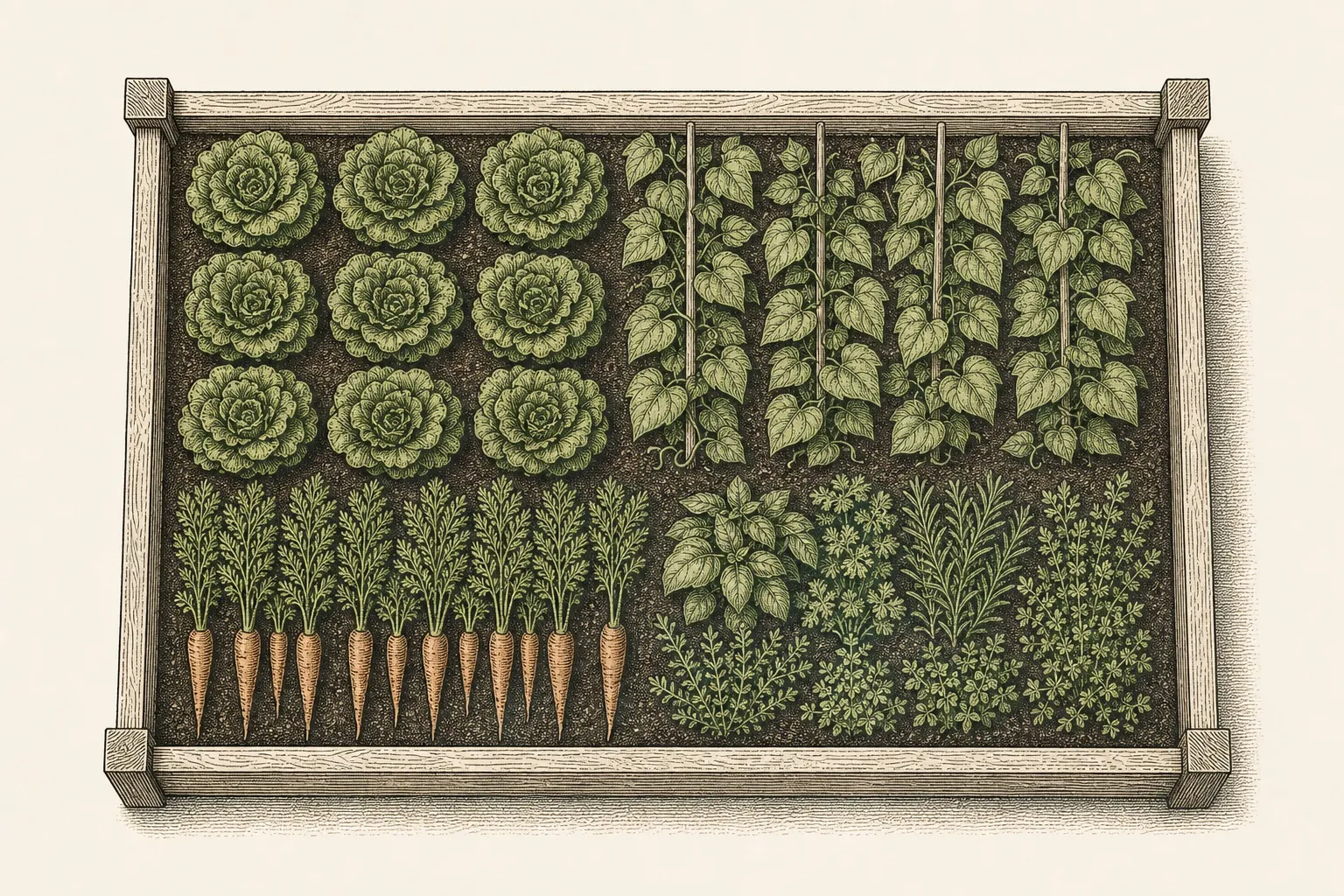
Plant in blocks and grids rather than long single rows, so you fit more plants into the same space and shade out weeds. A simple square grid is the easiest way to plan spacing without overthinking it.
A few rules that make a small bed productive:
- Put tall crops (tomatoes, climbing beans) on the north side so they do not shade shorter plants.
- Tuck quick crops like radishes and lettuce between slower ones such as carrots or kale.
- Group plants with similar water and light needs together.
- Leave just enough room for each plant to size up, then thin without guilt.
In a 4 by 8 foot bed you might run a block of salad leaves, a block of beans, a few carrots and beets, and one or two tomatoes staked at the back. That single bed covers a lot of dinners.
A grid makes spacing simple. Picture the bed divided into one-foot squares: a square holds one tomato, four lettuces, nine bush beans, or sixteen radishes, depending on the plant. You do not need to measure to the inch, but thinking in squares stops you from sowing a whole packet of carrots into a space meant for a handful. Replant each square as soon as it is cleared and the bed stays productive from spring to autumn.
When do you plant and harvest?
Plant in waves, not all at once. Cool-season crops (lettuce, radishes, peas, kale) go in early, while warm-season crops (beans, tomatoes, courgette) wait until the soil is warm and frost has passed.
The trick to a long harvest is succession sowing: plant a short row of lettuce or radishes every two to three weeks instead of all on one day. As one crop finishes, replant the gap. Because a raised bed warms early and drains well, you can start a little sooner in spring and keep going later into autumn, especially with a simple cover or cloche on cold nights.
How often should you water a raised vegetable bed?
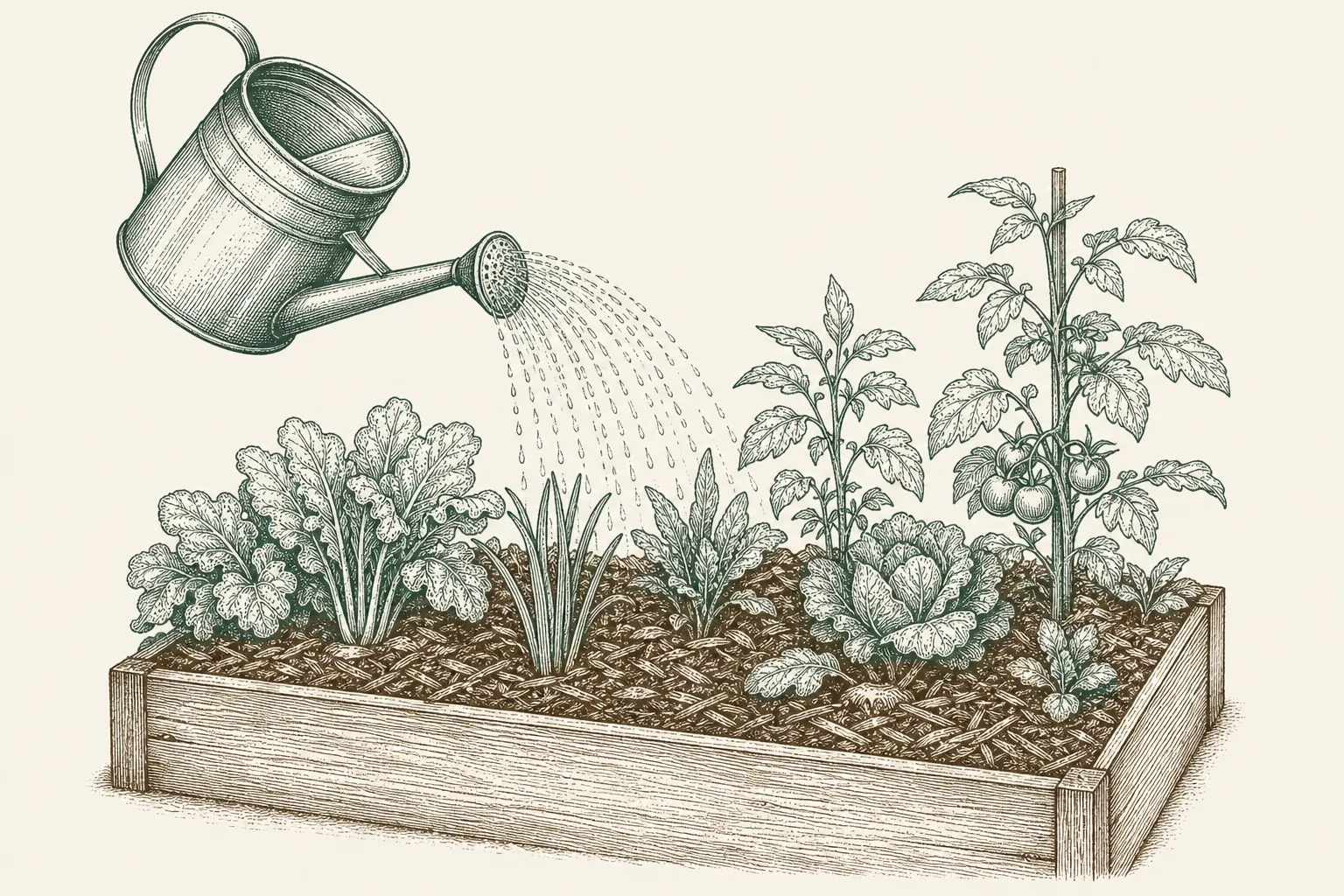
Water deeply two or three times a week rather than a little every day. Raised beds drain faster than open ground, so they dry out sooner, especially in summer and in shallow timber-sided beds.
Check before you water: push a finger into the soil, and if the top inch or two is dry, give the bed a long, slow soak at the base of the plants. Deep, less frequent watering pulls roots downward and makes plants far tougher in a heatwave, while a shallow daily splash keeps roots near the dry surface.
A layer of mulch, such as straw or shredded leaves, holds moisture in and keeps weeds down, so you water less often. Morning is the best time: leaves dry through the day, and slugs find less to enjoy after dark.
A simple plan to start raised bed vegetable gardening
Here is the whole process for a first bed, start to finish:
- Build and fill one 4 by 8 foot bed with a topsoil and compost blend.
- Choose four or five easy crops you like to eat.
- Plant them in blocks, tall crops to the north.
- Water deeply two or three times a week rather than a little every day.
- Feed fruiting crops like tomatoes every couple of weeks once they set fruit.
- Sow a few more salad leaves or radishes every two to three weeks.
That is it. Do these six things and the bed will carry you through the season.
Common beginner mistakes to avoid
Most first-year problems come down to a handful of avoidable mistakes:
- Overcrowding. Crammed plants compete and underperform. Follow spacing and thin early.
- Too much shade. Most vegetables want six or more hours of sun. Watch your yard before you build.
- Letting the bed dry out. Raised beds drain fast, so they need regular, deep watering in summer.
- Growing the wrong crops for the depth. Give carrots and parsnips a deeper bed.
- Skimping on soil. Poor or pure native soil disappoints. Invest in a real topsoil and compost blend.
Your first raised bed vegetable garden
Start with one bed, a sunny spot, and a few crops you genuinely want to eat. A single well-planted raised bed teaches you more in one season than a shelf of books, and it is far easier to keep on top of than a sprawling plot.
When you are ready, read the full raised bed basics for building and filling, then browse the journal for guides on soil, layout, and what to plant next.