Field notes
Why Tomato Leaves Turn Yellow (and How to Fix It)
Why tomato leaves turn yellow: how to tell harmless aging from overwatering, nitrogen and magnesium deficiency, or disease, and the exact fix for each.
TL;DR
- Check which leaves are affected first. Yellowing on the oldest, lowest leaves is often just normal aging and nothing to worry about.
- Overwatering and poor drainage are the most common fixable cause. Keep the soil evenly moist, never waterlogged, and make sure pots drain freely.
- Uniform yellowing of older leaves can be a nitrogen shortage; yellow between green veins on older leaves points to magnesium.
- Fix magnesium with an Epsom salts spray (about 20 g per litre of water) and ease off high-potassium feed.
- Yellowing in patches, on one side, or with brown target-ring spots usually means disease. Remove affected leaves and improve airflow.
If your tomato leaves turn yellow, do not panic and do not reach for a spray bottle straight away. Yellow leaves are a signal, and the cause is usually easy to read once you know what to look at: which leaves changed first, and what the pattern looks like. This guide walks through every common reason tomato leaves turn yellow, from harmless to serious, with the specific fix for each.
Why do tomato leaves turn yellow?
Tomato leaves turn yellow when something interrupts the green chlorophyll in the leaf, and the four usual causes are aging, watering problems, nutrient shortages, and disease. The trick to diagnosing it is to look at the pattern rather than the single leaf.
Ask three quick questions. Which leaves went yellow first, the old ones near the base or the new growth at the top? Is the whole leaf yellow, or just the area between the veins? And is it spread evenly, or in patches and spots? Aging and most nutrient and water problems start on the older leaves low on the plant, while spots, blotches, and one-sided yellowing usually mean disease. Work through the sections below in order and you will almost always land on the answer.
Yellow lower leaves are usually normal
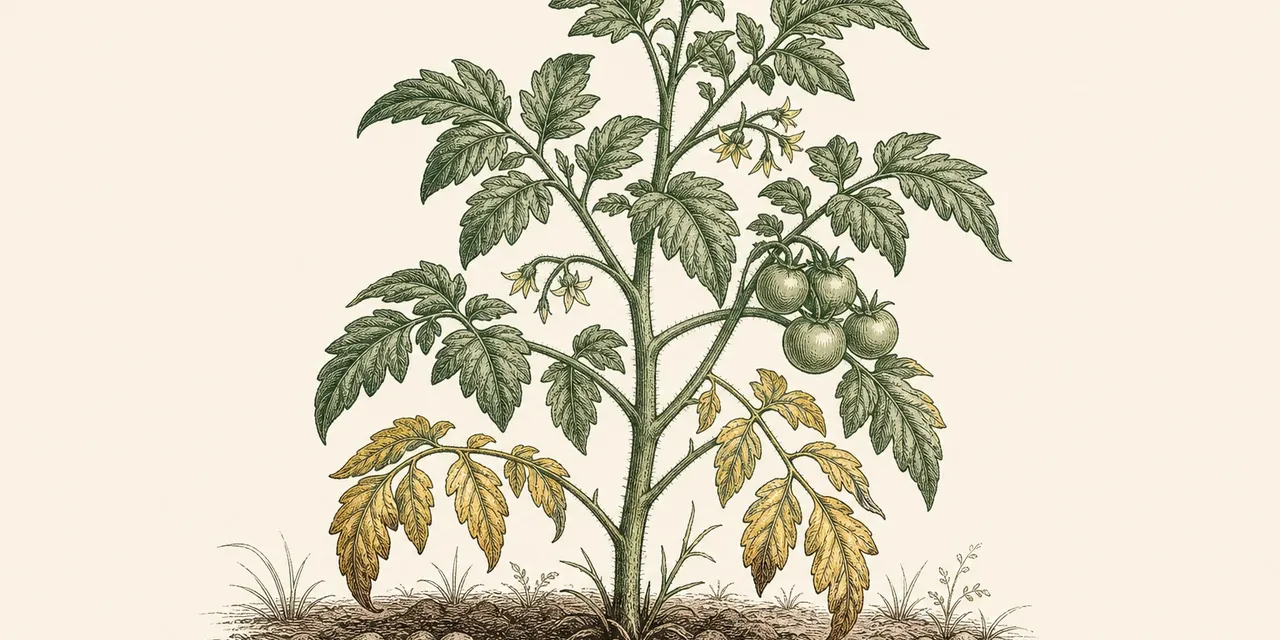
The single most common reason for yellow tomato leaves is also the least worrying: the plant is simply retiring its oldest leaves. As a tomato grows tall and bushy, the lowest leaves get shaded, stop earning their keep, and the plant pulls nutrients out of them to feed new growth above.
The RHS notes that when discoloration is present only in the older leaves, and the rest of the plant looks healthy, there is no cause for concern. If it is just a few bottom leaves going yellow on an otherwise vigorous plant, that is normal. Pinch or snip those leaves off cleanly at the stem. Removing them tidies the plant, improves airflow around the base, and lets light reach the soil, which also helps prevent disease later in the season.
How can you be sure it is just aging? Look up. If the top two-thirds of the plant is green and growing strongly, and only the very lowest leaves are fading, the plant is healthy and doing exactly what it should. Trouble shows up the other way round, in the new growth or across the whole plant at once.
Are you overwatering or underwatering?
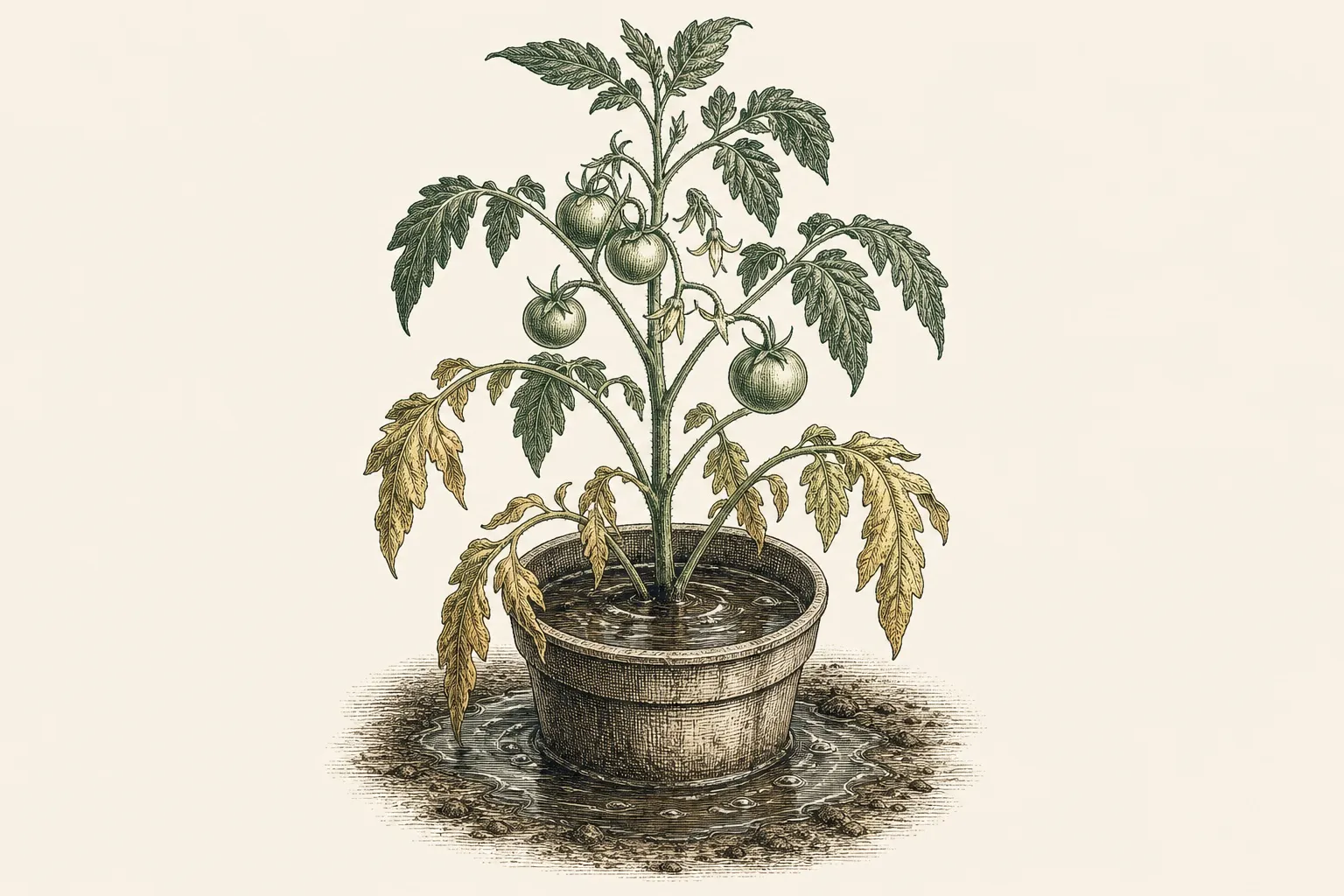
Watering is the most common fixable cause of yellow leaves, and overwatering does more damage than under. Waterlogged roots cannot take in oxygen or move nutrients properly, so the leaves pale and yellow even though the soil is wet.
Aim for evenly moist soil that never sits soggy. The University of Minnesota Extension stresses keeping consistent moisture, and the RHS warns against erratic watering, advising that you bring a dried-out plant’s moisture back up gradually rather than flooding it. Make sure containers have open drainage holes and never let a pot stand in a saucer of water. Underwatering shows up differently: leaves wilt and curl first, then yellow and crisp at the edges, and the soil is dry to a finger’s depth. Either way, the cure is the same steady rhythm. Water deeply when the top of the soil starts to dry, and let pots drain. If you are not sure whether a plant is wet or dry, push a finger a few centimetres into the soil before you water: damp means wait, dry means water. That single habit prevents most watering-related yellowing.
Could it be a nutrient deficiency?
When older leaves yellow evenly across the whole plant, or yellow between the veins, the plant is often short of a nutrient. The two that matter most for tomatoes are nitrogen and magnesium, and they look different.
Nitrogen is mobile inside the plant, so a shortage shows on the older leaves first: the plant moves nitrogen up to new growth and the lower, oldest leaves fade to a pale, uniform yellow while the plant looks generally weak. A balanced feed corrects it. Resist the urge to overdo it, though, because too much nitrogen gives you a big, leafy, bushy plant that is slow to set fruit.
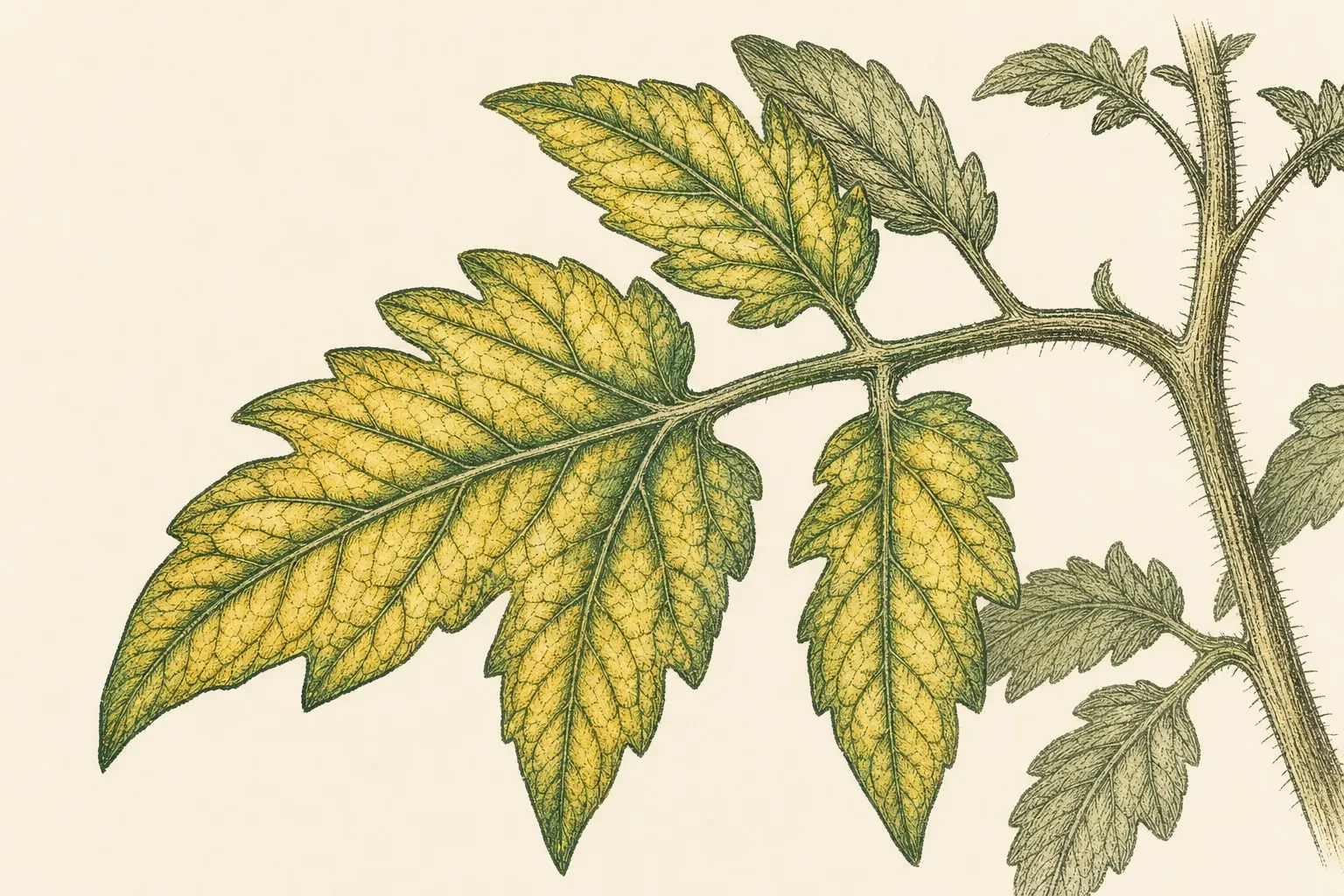
Magnesium deficiency is extremely common in tomatoes, especially those grown in pots and grow bags. It shows as yellowing between the veins of the older leaves, so the veins stay green while the tissue around them turns yellow, almost like a green skeleton. A big trigger is your feed: high-potassium tomato fertilisers can actually cause magnesium deficiency, because the plant takes up potassium in preference to magnesium.
How to fix magnesium deficiency
Magnesium deficiency looks alarming but is one of the easiest problems to put right. The standard remedy is Epsom salts, which is magnesium sulphate.
For a quick fix during the growing season, the RHS suggests a foliar spray of Epsom salts at about 20 g per litre of water, applied to the leaves in summer. For a longer-term correction on light, free-draining soils, you can apply magnesium sulphate to the soil at around 30 g per square metre. At the same time, ease back on high-potassium feeds so the plant can take up the magnesium it needs. The new leaves should come through green, even though the already-yellowed older leaves will not turn back.
When do tomato leaves turn yellow from disease?
If the yellowing comes with spots, blotches, or appears on just one side of the plant, you are likely looking at disease rather than diet. Three are worth knowing, because they are common and they look distinct.
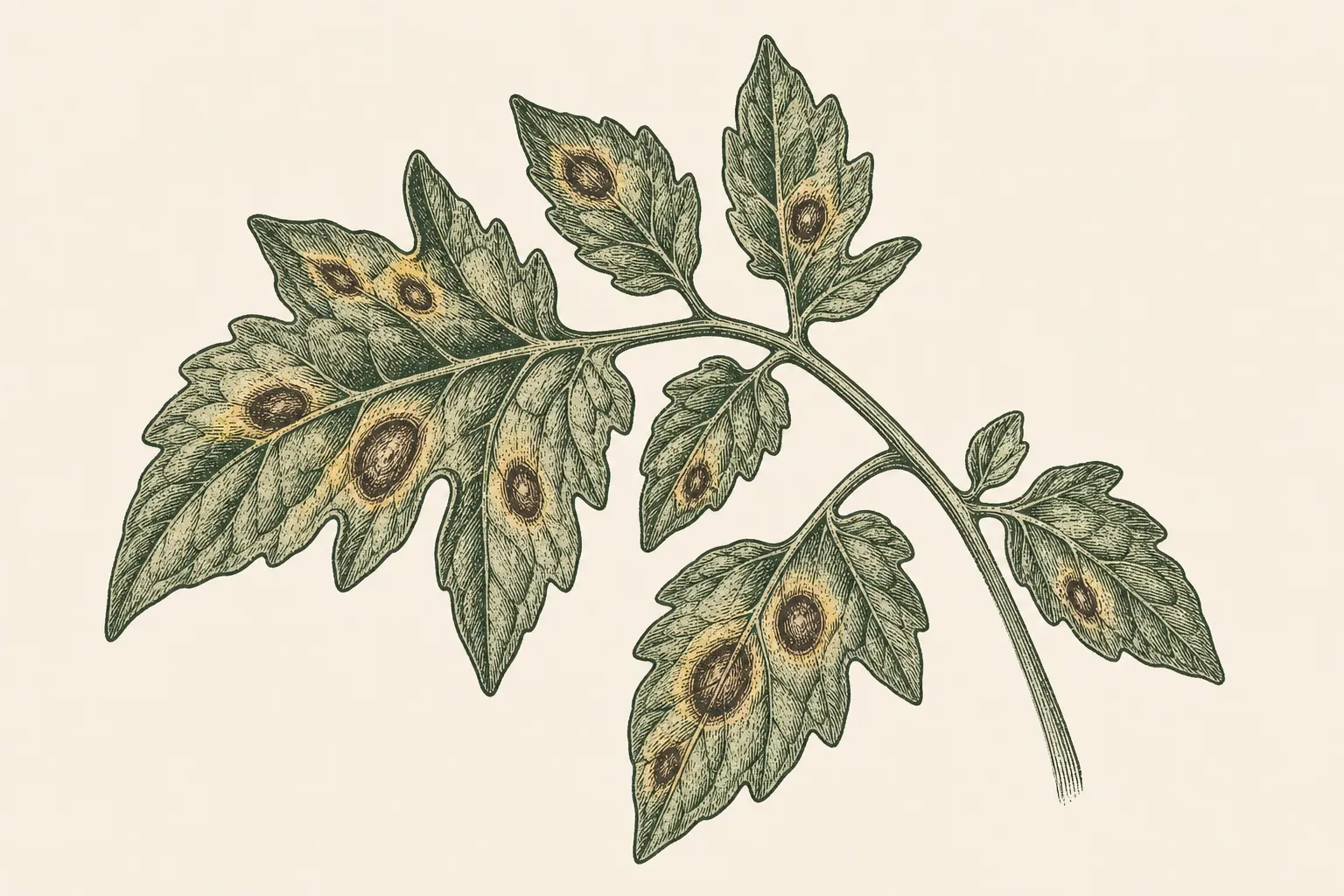
Early blight starts on the lower leaves near the ground and makes round brown spots with target-like concentric rings; the tissue around each spot turns yellow, and badly hit leaves yellow fully and drop. Septoria leaf spot is similar in habit, peppering leaves with small spots until they yellow and fall. Fusarium wilt is different and more serious: the yellowing is not uniform, often showing on one side of the plant or even one half of a leaf, and the plant wilts in the heat of the day then recovers at night. There is no cure for fusarium, so remove affected plants, choose resistant varieties next time, and use crop rotation of three to five years. For all leaf diseases, water at the base rather than over the leaves, space plants for airflow, and remove infected leaves promptly. Put diseased leaves in the bin rather than the compost heap, so you do not carry spores back onto next year’s plants.
Could pests be the cause?
Sometimes the yellowing is the work of tiny sap-suckers rather than anything in the soil. Aphids and whiteflies cluster on the undersides of leaves and drain the plant, leaving foliage curled, puckered, and yellowing, often with a sticky residue.
Turn a few leaves over and look closely, especially near the growing tips. A strong jet of water knocks aphids off, and an insecticidal soap deals with stubborn colonies. Encouraging ladybirds and other natural predators keeps numbers down over a season. Pests are usually a smaller cause than water and nutrients, but they are worth ruling out when the yellowing comes with visible insects or that tell-tale stickiness.
How to keep your tomato leaves green
Most yellow tomato leaves trace back to water or feeding, and both are within your control. Keep the soil evenly moist and free-draining, feed a balanced fertiliser while watching for magnesium, give plants room to breathe, and water at the base to keep leaves dry.
Above all, read the plant. Yellow on the lowest leaves of a thriving plant is usually nothing; yellow between the veins means magnesium; pale uniform older leaves mean nitrogen; and spots or one-sided yellowing mean disease. Match the pattern to the cause and the fix is almost always simple. For more on growing strong plants from the start, see our guides to growing tomatoes in pots and growing tomatoes from seed.