Field notes
How to Grow Tomatoes in Pots and Containers
Growing tomatoes in pots and containers: the right pot size, best varieties, compost, watering, feeding, and how to avoid blossom-end rot for a heavy crop.
TL;DR
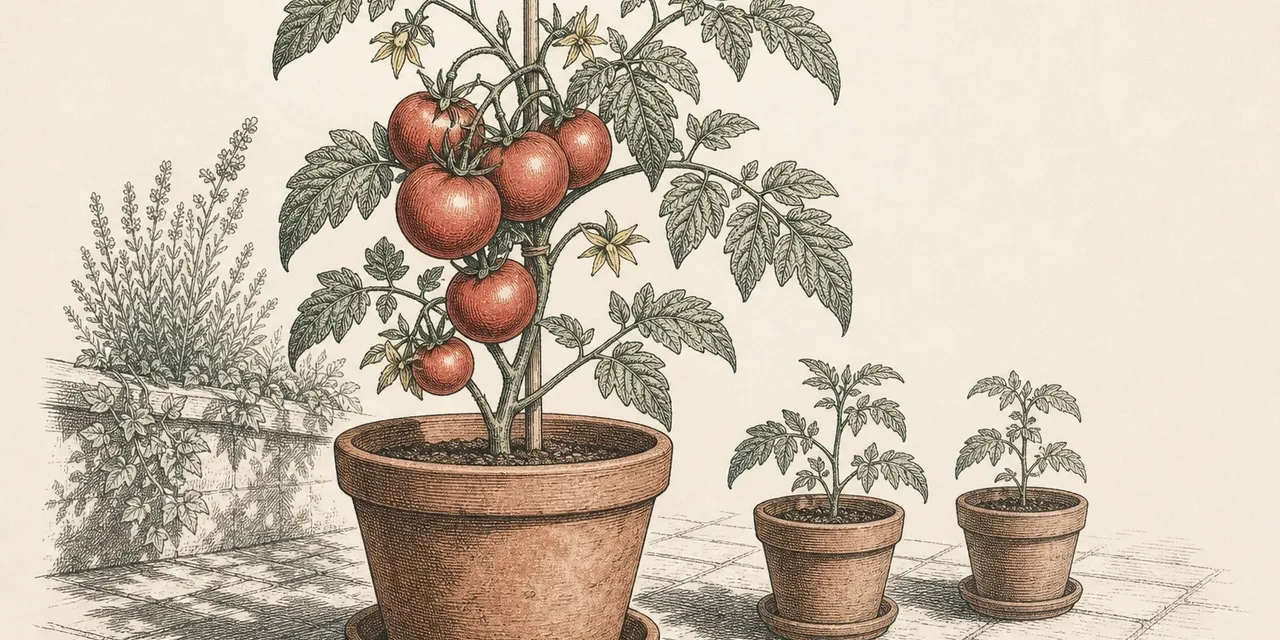
- Give each plant a big pot: one tomato per 30 to 45 cm (12 to 18 in) container is the sweet spot, since small pots dry out and starve the roots.
- Choose bush (determinate) varieties for pots; they stay around 24 to 30 in tall and need little or no staking.
- Use fresh peat-free multipurpose or loam-based compost, not garden soil, and put pots in full sun.
- Water consistently. Container plants can need watering daily in hot weather, and uneven moisture causes blossom-end rot.
- Start feeding with a high-potassium liquid feed every 10 to 14 days once the first fruits begin to swell.
Growing tomatoes in pots and containers is the easiest way to harvest your own crop when you have a patio, a balcony, or a sunny doorstep instead of a garden bed. Tomatoes are happy in pots as long as you get four things right: a large enough container, the right variety, steady watering, and regular feeding. This guide walks through each one with the specific numbers you need.
Why grow tomatoes in pots and containers?
You grow tomatoes in pots because it puts a productive crop within reach of almost any home, and it gives you more control than open ground. A pot can sit in the warmest, sunniest corner you have, which is exactly what these heat-lovers want.
Containers also warm up faster in spring, so roots get going sooner. You move pests and disease problems further away from the soil, you can shuffle plants out of cold snaps, and you water and feed each plant exactly to its needs. For renters and balcony gardeners, a few pots are often the only way to grow tomatoes at all, and a single well-fed plant can still produce kilos of fruit across a season.
The trade-off is that a pot is a closed system. It holds a limited reserve of water and nutrients, so the plant depends entirely on you. Get the routine right and that dependence becomes an advantage, because nothing about the plant’s diet is left to chance.
What size pots and containers do tomatoes need?
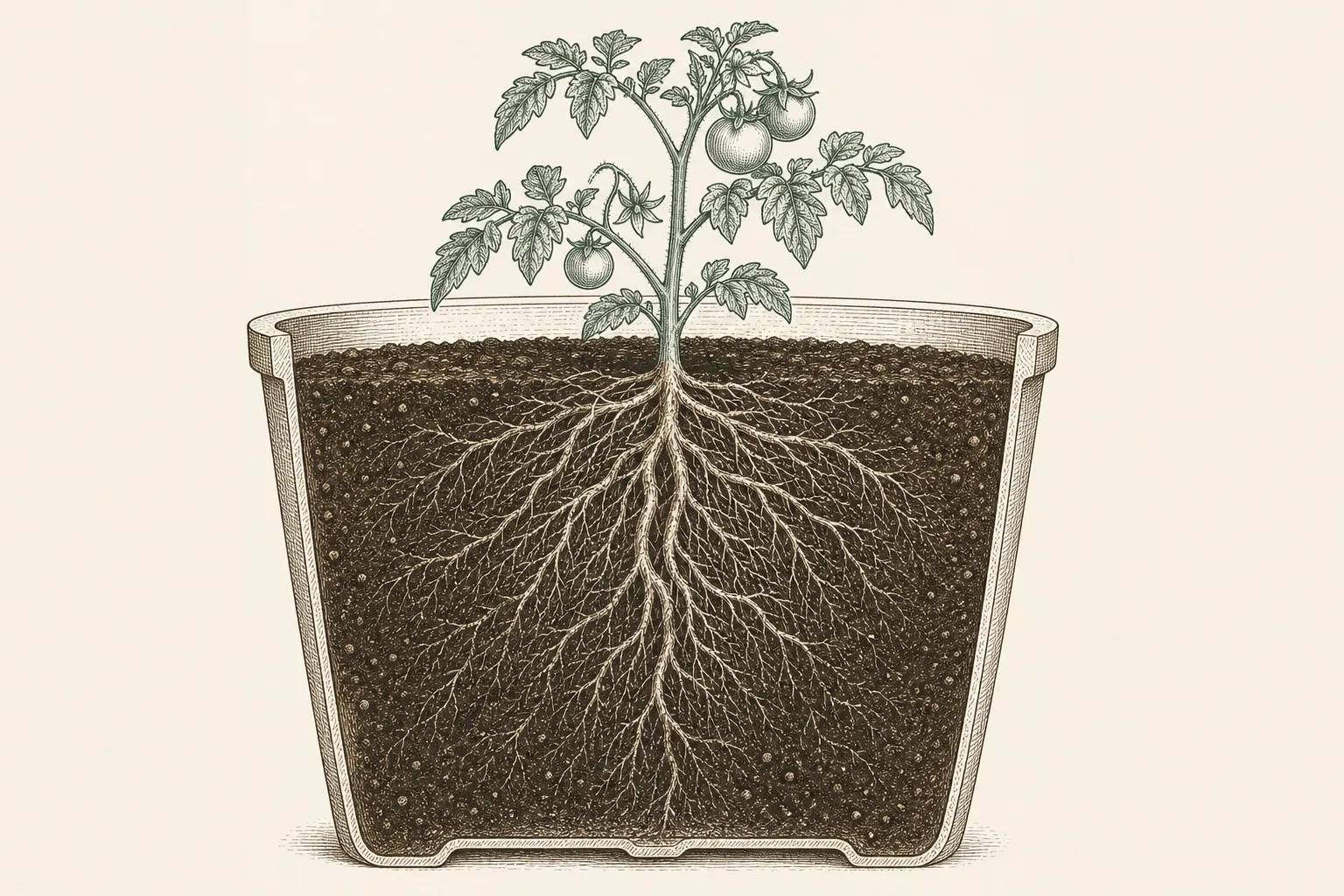
Bigger is almost always better. Aim for one plant per 30 to 45 cm (12 to 18 in) pot, or two plants in a standard growing bag. A larger volume of compost holds more water and nutrients, which steadies the plant through hot days and reduces stress.
As a rough floor, give a single tomato at least 30 cm of width and a similar depth, which works out to roughly 20 to 40 litres of compost. Cherry and small bush types cope in the lower end of that range, while a vigorous plant carrying a heavy crop will be far happier at the top of it. Small pots are the most common beginner mistake: they dry out within hours in summer and the roots quickly run out of room.
Whatever you choose, drainage holes are non-negotiable. Tomato roots rot in waterlogged compost, so make sure water runs freely from the base, and stand pots on feet or bricks if they sit on a tray.
Which tomato varieties suit containers?
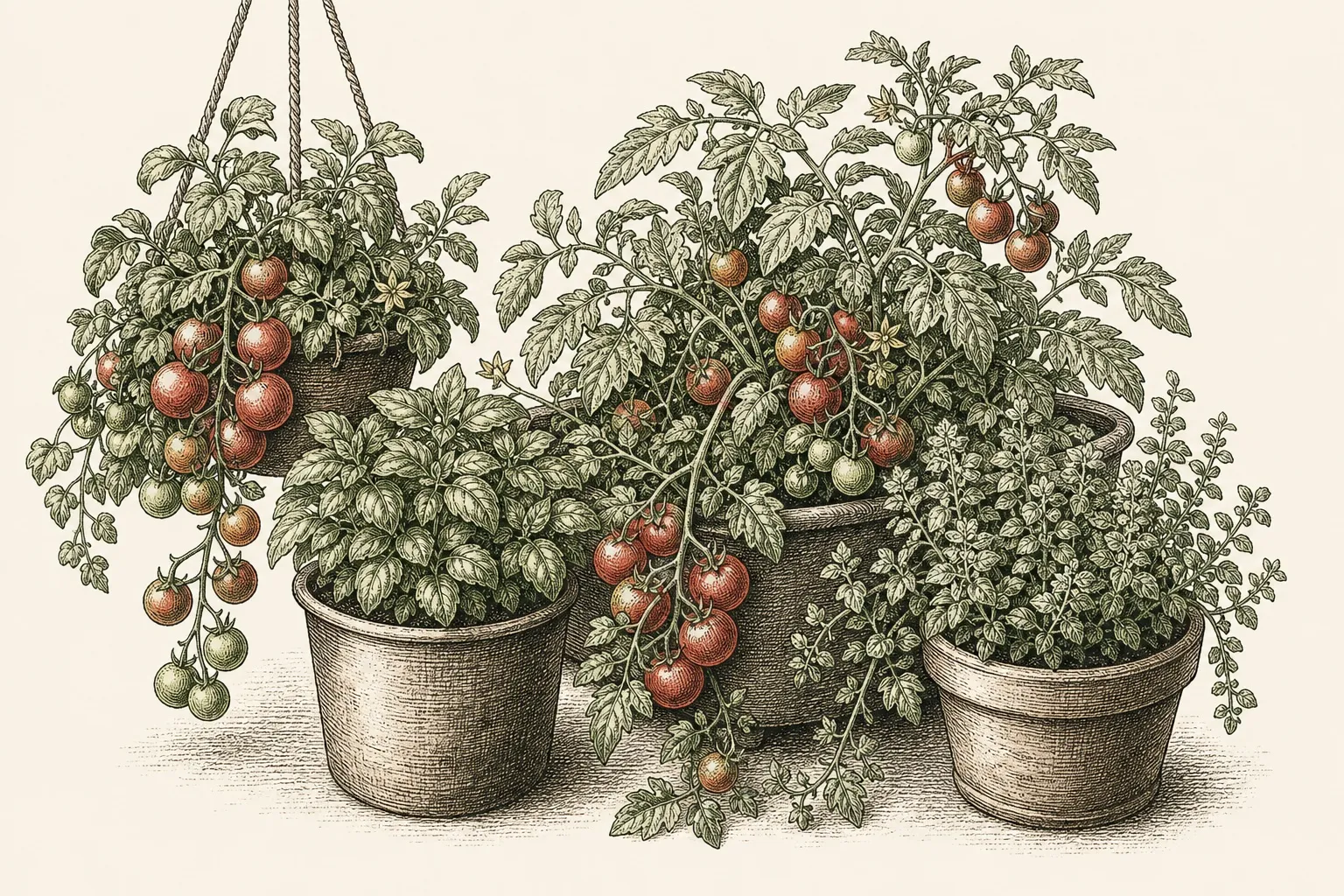
Bush, or determinate, varieties are the natural fit for pots. They grow to a set size, crop over a concentrated period, and the bush varieties stay compact enough for large patio containers, troughs, window boxes, and even hanging baskets.
The University of Minnesota Extension notes that for small spaces, determinate types may be the only practical option. These plants typically reach 24 to 30 in in height and do not need the constant staking and pruning that vining types demand. Cherry and tumbling cherry tomatoes are especially forgiving in containers and crop heavily from a small plant.
Cordon, or indeterminate, tomatoes can grow in pots too, but they keep climbing all season and need a tall cane or string for support, which makes a container top-heavy and thirsty. If you want to grow a cordon variety on a patio, give it the largest pot you can and be ready to water and tie it in often. If you are starting plants yourself, see our guide to growing tomatoes from seed.
What compost and soil should you use?
Use a fresh, good-quality potting compost rather than soil dug from the garden. Garden soil is too heavy for containers, drains poorly, and can carry pests and disease into your pots.
The RHS recommends a peat-free loam-based or multipurpose peat-free compost for tomatoes in pots. Loam-based mixes hold water and nutrients a little better and add weight that keeps tall plants stable, while multipurpose composts are lighter and easier to lift. Either works well as long as it is fresh, because old or reused compost is often depleted and compacted.
You do not need to add fertiliser to the compost at planting time. Most bagged composts carry enough feed for the first few weeks, and you take over with liquid feed once fruiting begins. A 2 to 3 cm layer of mulch, such as bark or gravel, on the surface helps slow evaporation on hot days.
Where should you put your pots?
Put your pots in the sunniest, most sheltered spot you have. Tomatoes are heat-loving plants that need full sun and a long, frost-free season to ripen well.
Aim for a position that gets as much direct sun as possible through the day, ideally six hours or more, against a warm wall or fence that radiates heat and blocks wind. A sheltered corner also protects tall plants from being rocked or snapped in gusts. Because pots are portable, take advantage of it: move them into the warmest light as the season shifts, and pull tender young plants under cover if a late frost threatens.
If you only have an indoor windowsill or a balcony with limited light, choose the smallest cherry varieties, which set fruit more reliably in less than ideal conditions, and expect a lighter crop than plants grown in full outdoor sun.
How do you water container tomatoes?
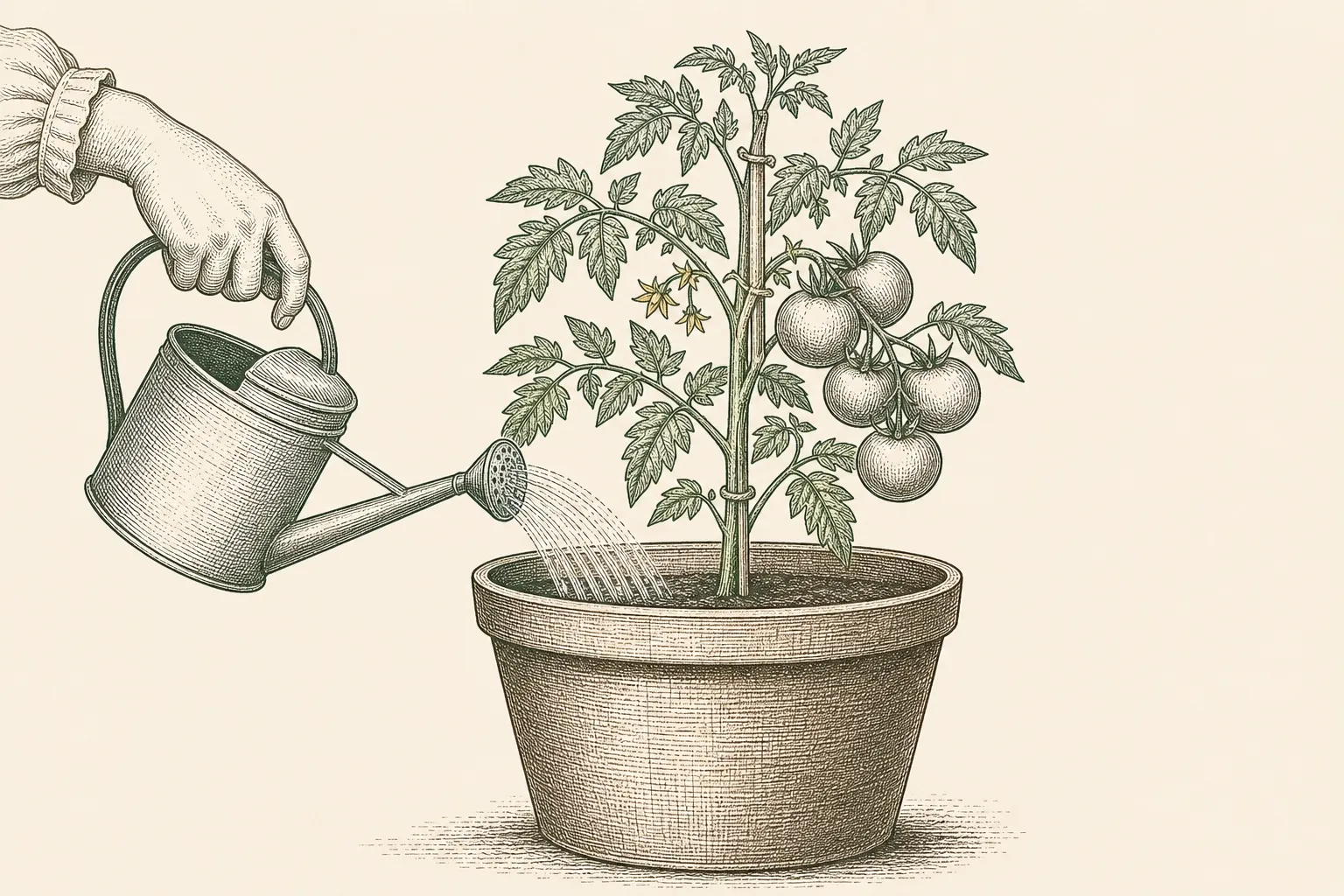
Watering is where most container tomatoes succeed or fail. Keep the compost evenly moist at all times, never letting it swing between bone dry and soaking, because that consistency is what builds healthy fruit.
Pots dry out fast, and in hot weather plants may need watering daily, sometimes twice on the hottest days. Water deeply until it runs from the drainage holes, rather than giving frequent light splashes. The Minnesota Extension warns that light watering encourages shallow roots and leaves plants more exposed to heat and drought stress, so the goal is to wet the whole root ball each time. As a benchmark, plants want roughly one inch of water a week from rain or irrigation, and far more in containers during a heatwave.
Water at the base of the plant in the morning where you can, keeping the leaves dry to reduce disease, and try to settle into a steady rhythm rather than watering only when the plant wilts.
How and when should you feed?
Start feeding once fruit appears, not before. A high-potassium feed encourages flowers and fruit, while too much nitrogen early on gives you a tall, leafy plant with little to eat.
The RHS advises feeding every 10 to 14 days with an organic high potassium liquid fertiliser once the first fruits start to swell. Tomato-specific liquid feeds are formulated for exactly this. The Minnesota Extension makes the same timing point, recommending you apply feed once the first fruits begin to enlarge and cautioning against excess nitrogen, which drives foliage at the expense of fruit. Follow the dilution rate on the bottle, since an overfed plant in a pot is easy to scorch.
Keep the schedule going right through the cropping season. A container holds only a small nutrient reserve, so regular liquid feeding is what keeps a heavily fruiting plant producing to the end of summer.
Supporting and pruning your plants
Bush varieties largely look after themselves and need little support beyond a short stake or a cage to keep laden branches off the compost. This low-maintenance habit is a big part of why they suit pots so well.
Cordon types are a different job. Push a tall cane in at planting time, before the roots fill the pot, and tie the stem in loosely as it grows. Pinch out the side shoots that form in the leaf joints so the plant puts its energy into one main stem and its fruit. Once a cordon has set four or five trusses, or has reached the top of its support, pinch out the growing tip so the existing fruit can ripen. Bush varieties should not be pinched out this way, as it only reduces their crop.
Common container tomato problems
A few problems show up again and again in pots, and most trace straight back to watering. The good news is that they are easy to prevent once you know the cause.
- Blossom-end rot. A sunken, dark patch on the base of the fruit, caused when blossom-end rot follows soil moisture swinging up and down during fruit growth. Steady watering is the cure.
- Splitting fruit. Sudden growth cracks appear when a dry plant is flooded with water and the fruit swells too fast, often after rain on a parched pot. Keep moisture even.
- Few fruits, lush leaves. Usually too much nitrogen or not enough sun. Switch to a high-potassium feed and move the pot into brighter light.
- Wilting in heat. Often simply a pot that has dried out. Check daily in summer and consider a larger container next year.
Your container harvest starts here
Growing tomatoes in pots comes down to a big enough container, a bush variety, full sun, and a steady rhythm of watering and feeding. Get those right and a single patio plant can keep your kitchen in fruit all summer, no garden bed required.
Pick out one or two compact varieties, pot them into the largest containers you can manage, and set a daily watering check once the weather warms. For your next step, browse the journal or read our guide to the best soil for growing your own.