Field notes
How to Grow Tomatoes from Seed
Grow tomatoes from seed the right way: when to start, how to sow, how to care for seedlings, and how to harden off and transplant for a big harvest.
TL;DR
- Start tomato seeds indoors about 6 to 8 weeks before your last expected frost.
- Sow shallow (twice as deep as the seed is wide) and keep the mix warm, around 18 to 24 C (65 to 75 F), to germinate.
- Once seedlings appear, give them 12 to 16 hours of bright light a day, kept close to the leaves, or they get tall and weak.
- Pot seedlings up once they have their first true leaves, then feed lightly.
- Harden off over about two weeks before planting out, and plant deep so the buried stem grows extra roots.
Learning how to grow tomatoes from seed is the single best upgrade a home gardener can make. You get hundreds of varieties instead of the four on the garden-center bench, you spend a fraction of the money, and you control timing so plants are ready the moment your soil warms. This guide takes you from seed packet to transplant, step by step.
Why grow tomatoes from seed?
You grow tomatoes from seed for choice, cost, and control. A packet of seeds costs about the same as one nursery plant but gives you dozens of tomatoes, and it opens up varieties you will never find as transplants.
Choice is the big one. Garden centers stock a handful of common types, while a seed catalog offers heirlooms, cherries, paste tomatoes, and disease-resistant hybrids by the hundred. Cost follows close behind: one packet can replace a whole tray of bought seedlings. Control is the quiet advantage. When you start your own, you decide the timing, so plants are the right size and fully hardened off exactly when your weather is ready, not whenever a shop happened to stock them.
There is a quality payoff too. You raise plants in clean mix and look at them every day, so you catch problems early and avoid bringing home pests or disease on a bought seedling. By transplant time you know exactly how each plant was grown.
When should you start tomatoes from seed?
Start tomato seeds indoors about 6 to 8 weeks before your last expected frost date. That window gives seedlings enough time to reach transplanting size without growing leggy and pot-bound on your windowsill.
Find your local last-frost date first, then count back six to eight weeks. The RHS suggests sowing from late winter into early spring depending on whether plants will go into a greenhouse or outdoors. Tomatoes are frost-tender, so the goal is to have sturdy young plants ready to move out only once nights stay reliably above about 10 C (50 F). Sow too early and you will be nursing overgrown plants for weeks; sow too late and you cut your harvest short.
Sow a few more seeds than you need, since not every one germinates and you can keep only the strongest. Two or three seeds per variety is plenty for most households. It also helps to know your type: indeterminate (vining) tomatoes crop over a long season and need staking, while determinate (bush) types ripen in a shorter window and suit pots and small beds.
What do you need to start tomato seeds?
You need very little: containers, a fresh seed-starting mix, warmth, and bright light. None of it has to be expensive, but the light matters more than beginners expect.
A short kit list:
- Clean seed trays, cell packs, or small pots with drainage holes.
- A fresh, fine seed-starting mix (not garden soil, which is too heavy and may carry disease).
- Warmth for germination, ideally from below. A heat mat helps because the potting mix can sit several degrees cooler than the room air.
- A bright grow light. A sunny windowsill rarely gives enough light this early in the year, and weak light is the top cause of floppy seedlings.
- Labels, because every tomato seedling looks identical for the first few weeks.
How do you sow tomato seeds?
Sow tomato seeds shallowly into moist mix and keep them warm until they sprout. Depth and warmth are the two things that decide whether germination is fast and even.
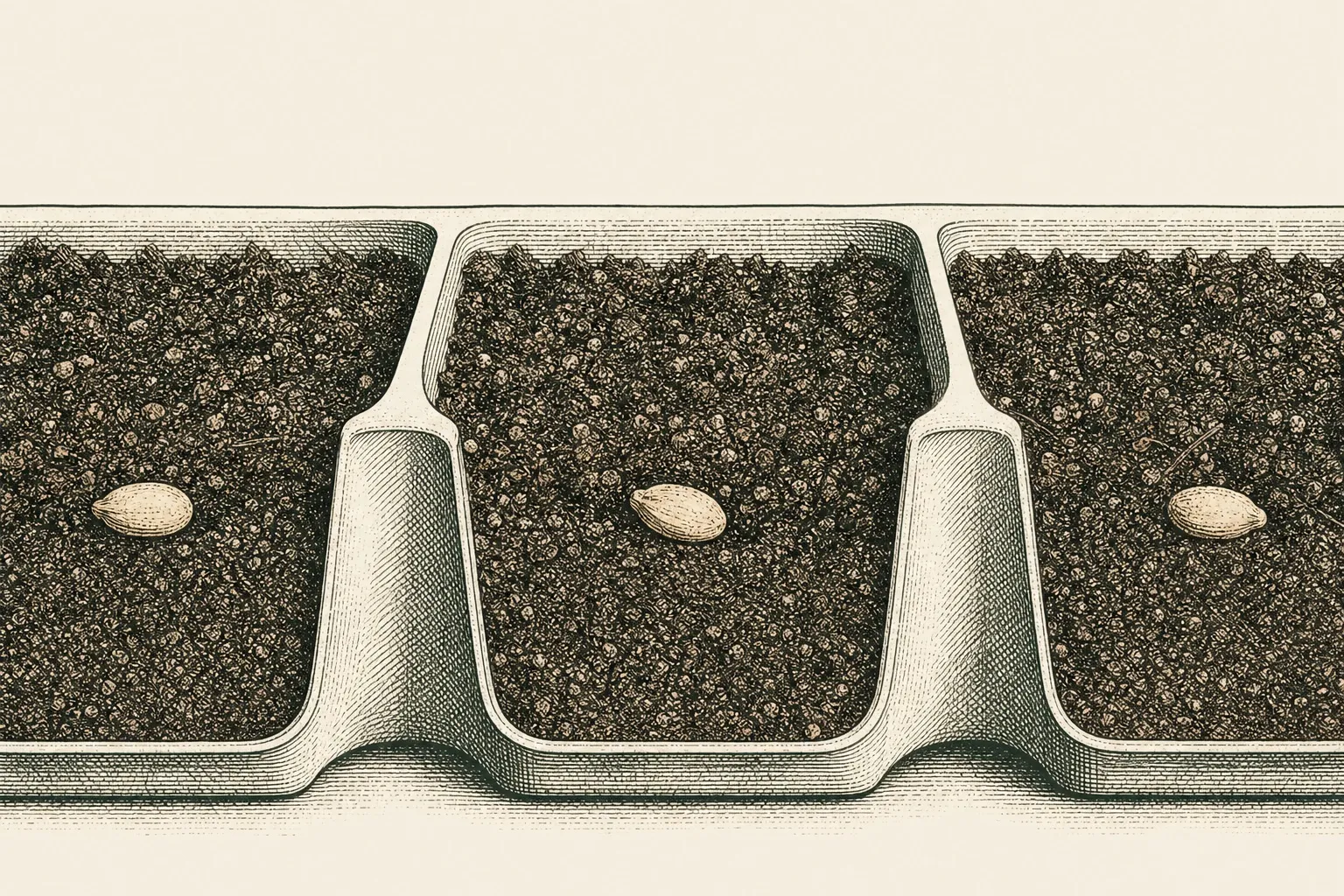
Fill containers with damp seed-starting mix and firm it gently. Set one or two seeds per cell and cover them lightly: the rule of thumb is to plant a seed twice as deep as it is wide, which for tomatoes is only about 5 mm (a quarter inch). Mist the surface, then keep the mix warm. Tomato seeds need warmth to germinate, around 18 C (64 F) or a little more, and most sprout in 5 to 10 days at that temperature. Cover the tray with a clear lid or bag to hold humidity, and remove it the moment seedlings appear. If two seeds sprout in one cell, snip the weaker one off at the surface with scissors rather than pulling it, so the keeper’s roots stay undisturbed.
How do you care for tomato seedlings?
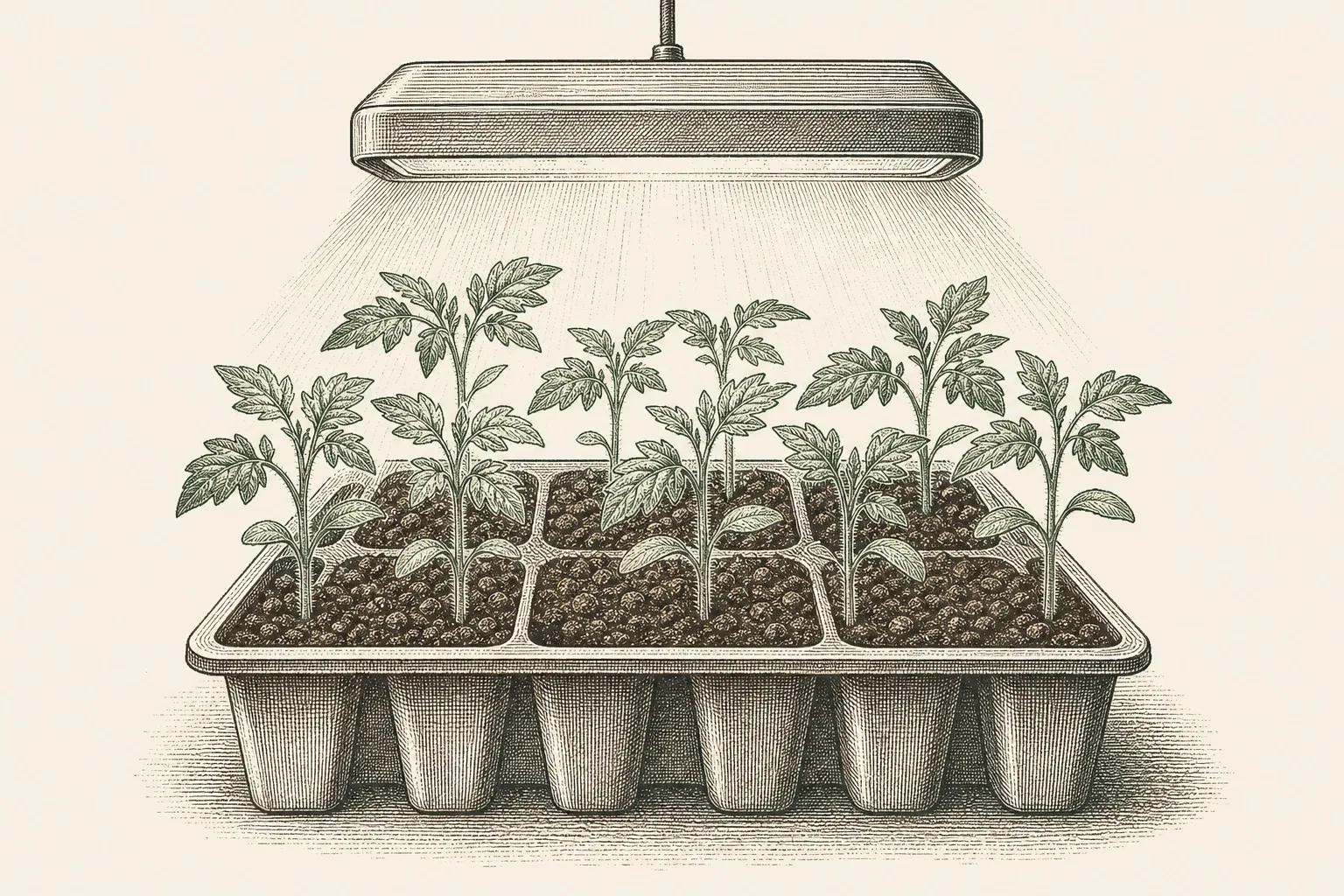
The moment seeds sprout, light becomes everything. Give seedlings bright light immediately and keep it close, or they stretch into thin, weak stems within days.
Aim for 12 to 16 hours of light a day, and keep the lamp just above the leaves, raising it as the plants grow. Water from below or with a gentle spray so you do not flatten the seedlings, and let the surface dry slightly between waterings to avoid rot. Once seedlings are up they no longer need germination heat: ordinary room temperature, around 18 to 21 C (65 to 70 F), is fine.
Once each seedling has its first true leaves, the second set that looks like real tomato foliage, move it into its own larger pot. This “potting up” gives the roots room and keeps plants growing strongly. Begin a weak liquid feed every week or two once they are in their own pots.
Why do tomato seedlings get leggy?
Tomato seedlings get leggy, meaning tall, pale, and floppy, almost always because of too little light. When light is weak or too far away, the seedling stretches toward it and spends its energy on height instead of a sturdy stem.
The fix is more light, kept closer. Run a grow light for 12 to 16 hours a day and keep it within a few centimeters of the leaves. A gentle breeze from a small fan, or brushing your hand across the tops once a day, also thickens stems by mimicking outdoor wind. If a seedling has already stretched, bury more of its stem when you pot it up and it will root along the buried section, so a leggy plant is rarely a lost cause.
What is hardening off?
Hardening off is the process of gradually acclimating indoor seedlings to outdoor conditions before they live outside full time. Skip it and tender plants can be scorched by sun and wind in a single afternoon.
Start about two weeks before you plan to plant out. Put the pots outside in a sheltered, partly shaded spot for an hour or two on the first day, then bring them back in. Add more time and more sun each day over a week or so, and leave them out overnight only once frost has passed. By the end, your plants are tough enough to handle real weather.
Transplanting your tomatoes outdoors
Transplant only after your last frost has passed and the soil has warmed. Tomatoes sulk in cold ground, so patience here pays off in faster growth later. Aim for soil around 15 C (60 F) or warmer; a cheap soil thermometer takes the guesswork out, and watering the plants well an hour before you move them keeps the rootball together.
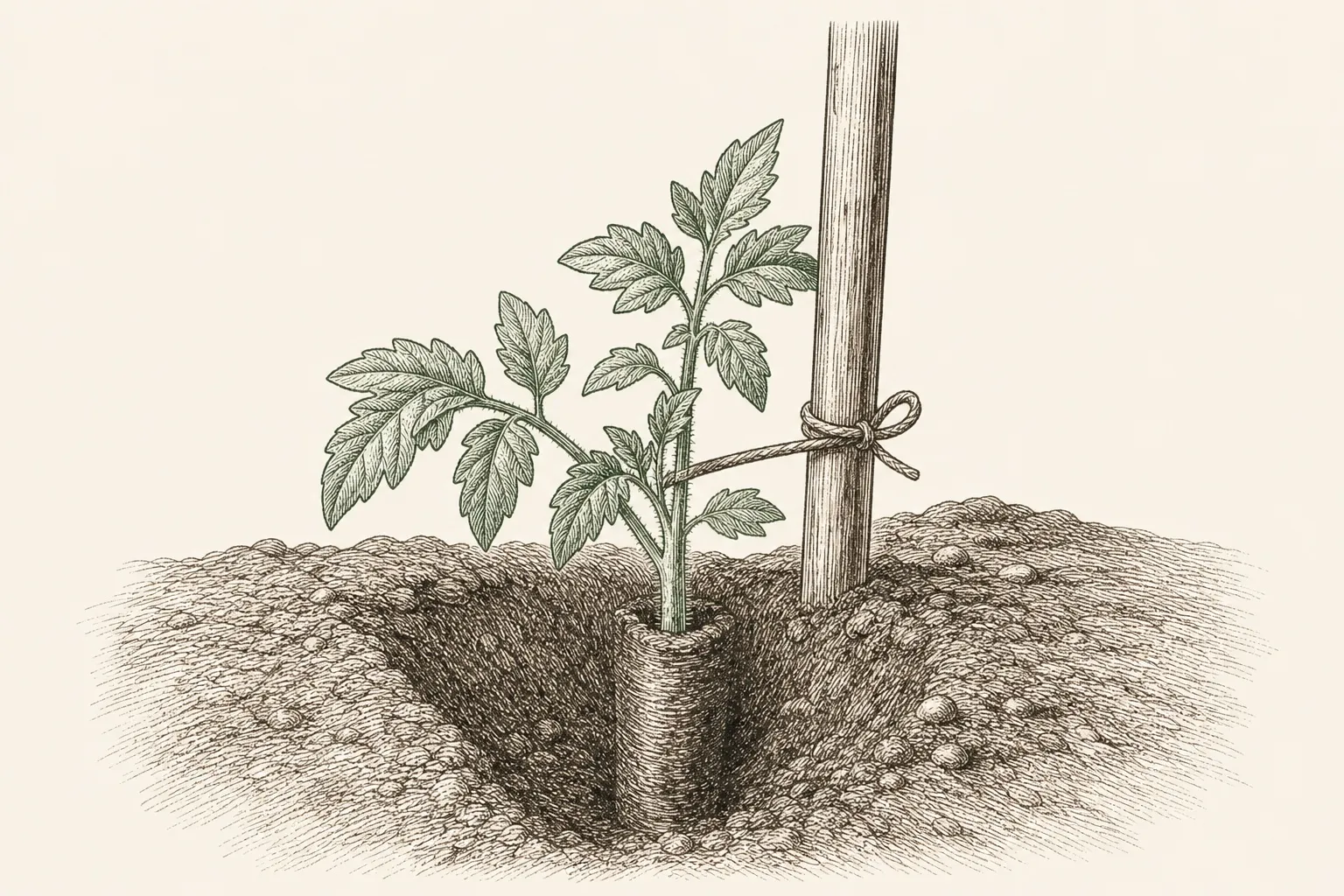
Plant tomatoes deep. Bury the stem up to the lowest set of leaves, because tomatoes grow new roots all along any buried stem, which makes for a stronger, more drought-resistant plant. Space plants about 45 to 60 cm (18 to 24 in) apart, water them in well, and add a stake or cage at planting time so you are not driving supports through the roots later. A raised bed is an ideal home for them, with its warm, free-draining soil.
Common seed-starting mistakes
Most first-year seed-starting problems trace back to a few avoidable errors:
- Starting too early. Overgrown seedlings stuck indoors for weeks do worse than younger, sturdier ones.
- Too little light. A windowsill alone usually gives thin, leggy plants. Use a grow light.
- Overwatering. Soggy mix causes damping off, a fungal collapse that kills seedlings at the soil line.
- Skipping hardening off. Moving plants straight outside shocks them badly.
- Planting out too soon. One late frost can undo months of work.
Your tomato season starts here
Growing tomatoes from seed looks like a lot of steps, but it is really just warmth, light, and patience in the right order. Get those three right and the rest takes care of itself. Start a few seeds this season, keep the light close, and harden the plants off properly, and you will never go back to buying transplants. Once you have done it with tomatoes, the same method works for peppers, chillies, and most other warm-season crops.
Ready to give them a home? See our guide to raised bed vegetable gardening, or browse the journal for more.